It’s easy to forget that when we bite down on a warm slice of pizza, we are enjoying a comfort food created over centuries of travel, traditions, and transformations. The history of pizza is not simply a culinary timeline; it’s also a story about migration, cultures. Knowing the origins of pizza helps us appreciate how a modest street food became one of the most enjoyed meals in the world.
In this blog, we will trace that history. From ancient flatbreads to pizzerias in the Neapolitan tradition, from early American slice shops to the neighborhoods of Washington, D.C., and how today’s love for traditional Italian pizza took shape.
Before Naples: Flatbreads & Early Inspirations
The history of pizza runs through ancient flatbreads that set the stage for later styles. The Egyptians baked flatbreads with grains and spices; the Greeks topped flatbreads with oil and seasoning; and the Romans served focaccia-like bread with olives, cheese, and aromatic spices.
While these were not ‘pizzas,’ they were early examples of eating bread enhanced with added flavors. With both early compositions and the word appearing in Italian records as early as 997 CE, we can see that the idea existed long before the modern dish we think of as pizza.
After tomatoes crossed the Atlantic as part of the Columbian Exchange in the sixteenth and seventeenth centuries, they began appearing regularly in the southern Italian diet, a major part of this story. As the idea of topping baked flatbread with tomatoes took hold, we began to see the essentials of the modern pizza.
The history of pizza starts across a broad region, but its identity narrows significantly as we arrive in Naples.
Naples Makes It Pizza: Street Food to Symbol
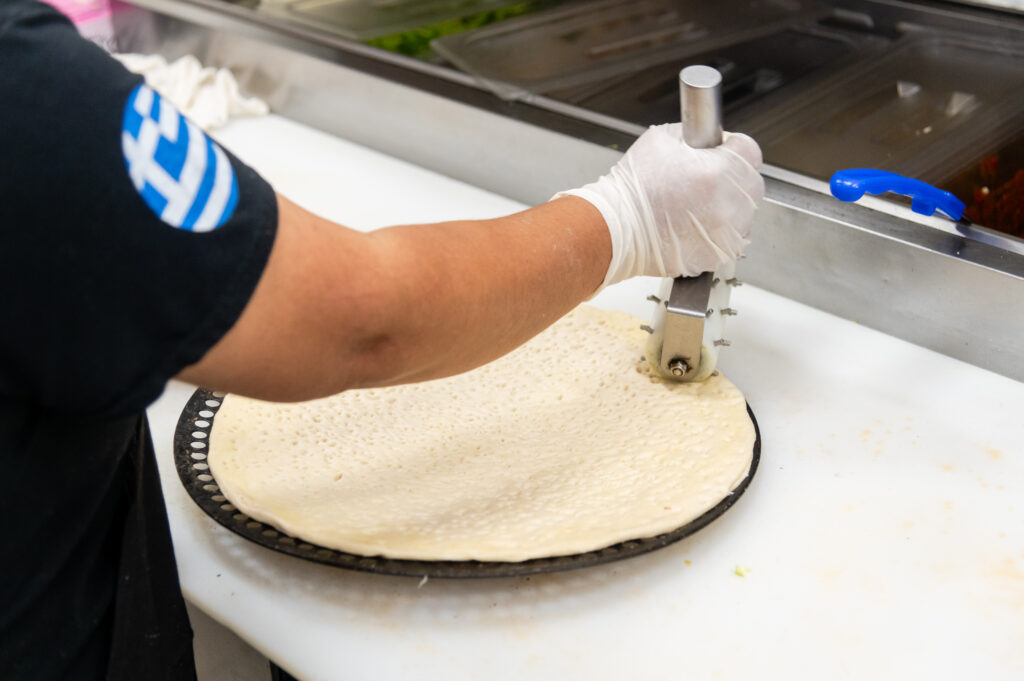
When discussing traditional Italian pizza, the reference point is Naples. It originated as a food of the common people in the working-class neighborhoods of this southern Italian port city. It was inexpensive, hot, quick to prepare, and full of flavor.
Between the 16th and 18th centuries, street vendors provided flatbreads topped with tomatoes to locals, travelers, dock workers, and artisans passing through the city. These were never considered haute cuisine: this was hearty, substantial food, sold to anyone wanting something hot, filling, and cheap. One of the earliest references to pizza’s move from street food to sit-down dining comes from Antica Pizzeria Port’Alba, which began as a vendor stand in 1738 and opened as a full restaurant in 1830; it is often cited as the first pizzeria.
The famous story goes like this: in 1889, a pizzaiolo made a pizza with tomato, mozzarella, and basil (the colors of the Italian flag) to honor Queen Margherita. Whether partly factual or embellished, the tale helped shape the identity of the Margherita pizza and further defined the Neapolitan tradition.
When we speak about the meaning of traditional Italian pizza today, we are acknowledging those origins: soft, stretchy, hand-stretched dough, few toppings, fast, high-temperature baking, and uncomplicated flavors that don’t need explanation. All of these have become quality standards for pizza worldwide.
Across the Atlantic: Immigration & America’s First Pizzerias
The next chapter in the history of pizza begins with migration. At the tail end of the 19th century and the early 20th century, Italian immigrants to America introduced their recipes, traditions, and food memories. Pizza made its debut in neighborhoods of New York City, Trenton, Boston, and other East Coast hubs with large Italian communities.
The first public license for a pizzeria in the United States was granted to Lombardi’s in New York City in 1905, and it is often recognized as the first “official” pizzeria, though many historians acknowledge that there were probably earlier, unlicensed, or less recognized pizzerias. After this, pizza began to spread from its Italian origins.
Once soldiers returned home after World War II, pizza culture expanded rapidly. Soldiers who had been in Italy and dined there wanted what they had eaten. American cities saw a rise in pizza shops, slice counters, and new regional styles. Technology influenced the food as coal ovens gave way to gas, and the need for items that could be reheated created pizza that was easier to sell in busy urban settings. By the mid-twentieth century, pizza had become not only a type of food but a large part of the daily American diet.
Pizza in Washington, D.C.: Slices, Scenes & Local Taste
As pizza culture began to make its way across the U.S., pizza in Washington, D.C. developed its own distinct identity. While influenced by shared Northeast pizza traditions, the District gravitated toward the slice-shop format, especially in nightlife neighborhoods, where it was typical for folks to grab jumbo slices. Anyone who has walked through Adams Morgan at 2 AM knows exactly what we mean.
Today, the pizza scene in D.C. remembers its roots but continues to embrace convenience. People are still thrilled by the basics, hand-stretched dough, simple sauce, fresh toppings, but they are most often ordered for delivery or preordered as takeout late at night. Whenever someone searches for “best pizza near me,” we assume they want flavor and speed.
The pizza culture in D.C. is born out of accessibility, community, and the ‘just bring it to my door’ lifestyle. It matches how we eat today: fast, social, and always hungry.
From Naples to Your Block: Manny & Olga’s Today
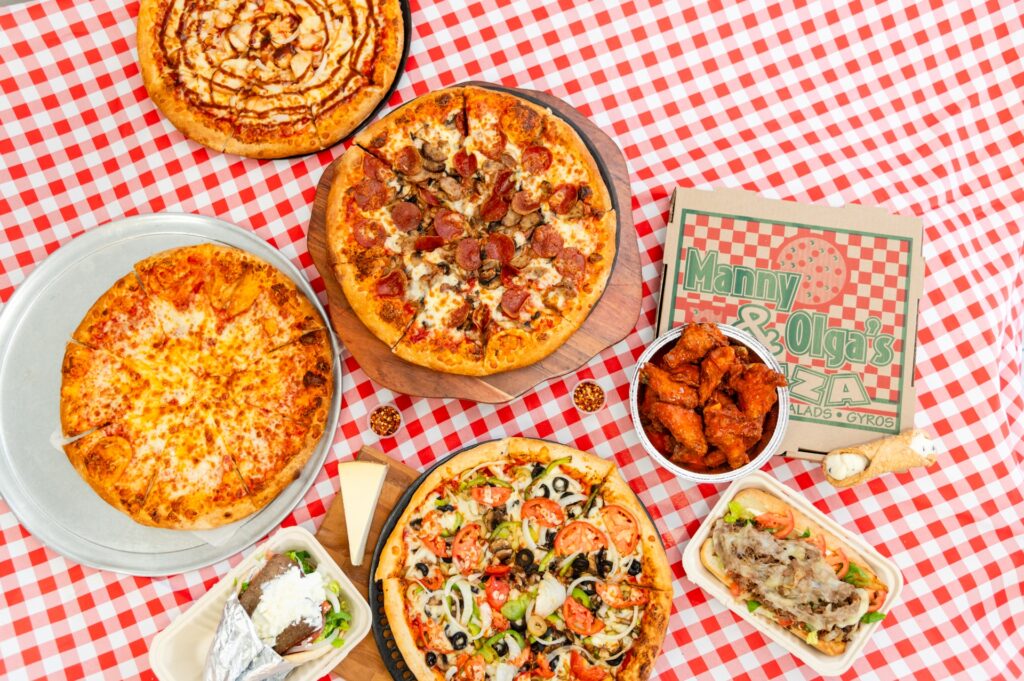
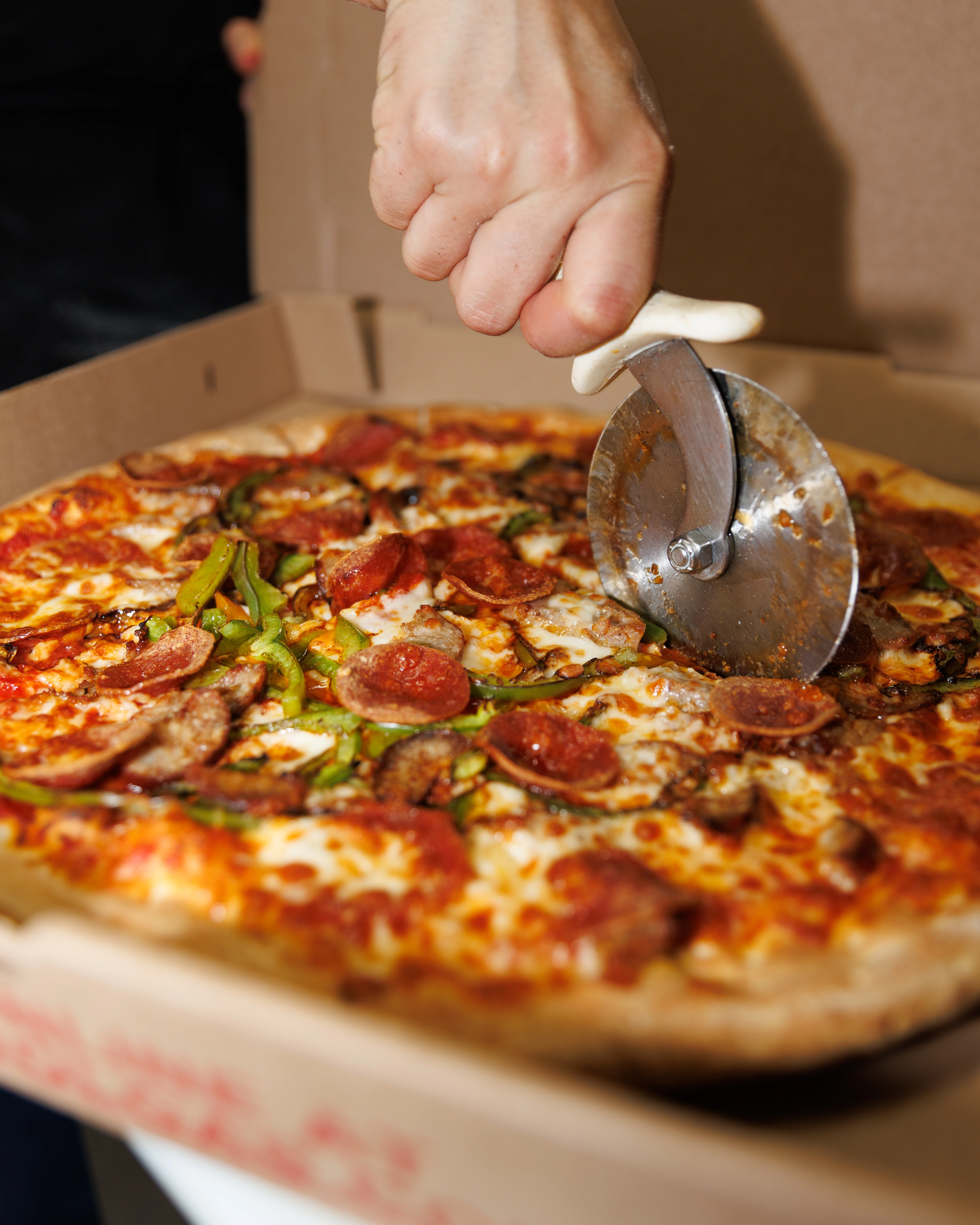
Having taken our trip through pizza history, it’s time to get grounded in the present and, more importantly, in your neighborhoods. What we carry forward from pizza’s origins matters. The fundamentals remain the same: good dough, good sauce, a good bake, and consistency. Here at Manny & Olga’s, we live by those timeless fundamentals. We make our dough from scratch, every day, at every location. We hand-stretch our pizzas, cut toppings fresh, and keep our bakes hot and fast. All the while, we echo Naples’ spirit and our Greek-Italian roots in D.C. and Maryland.
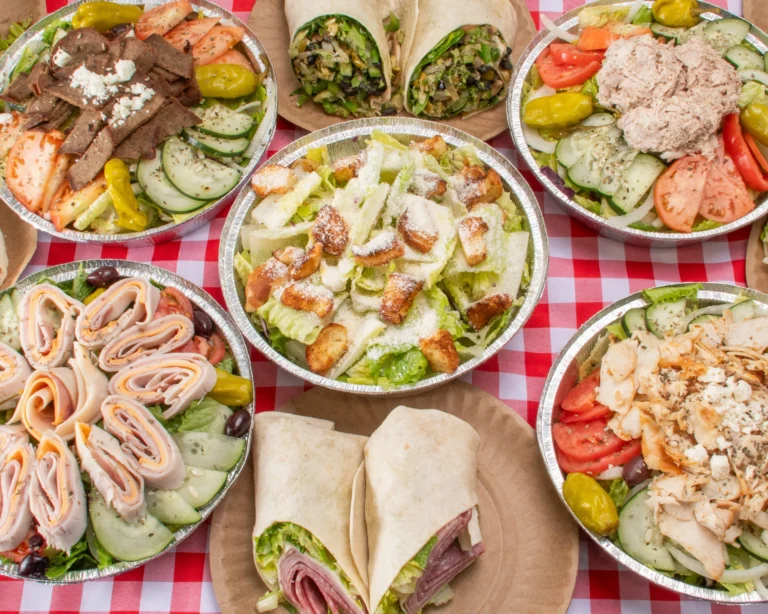
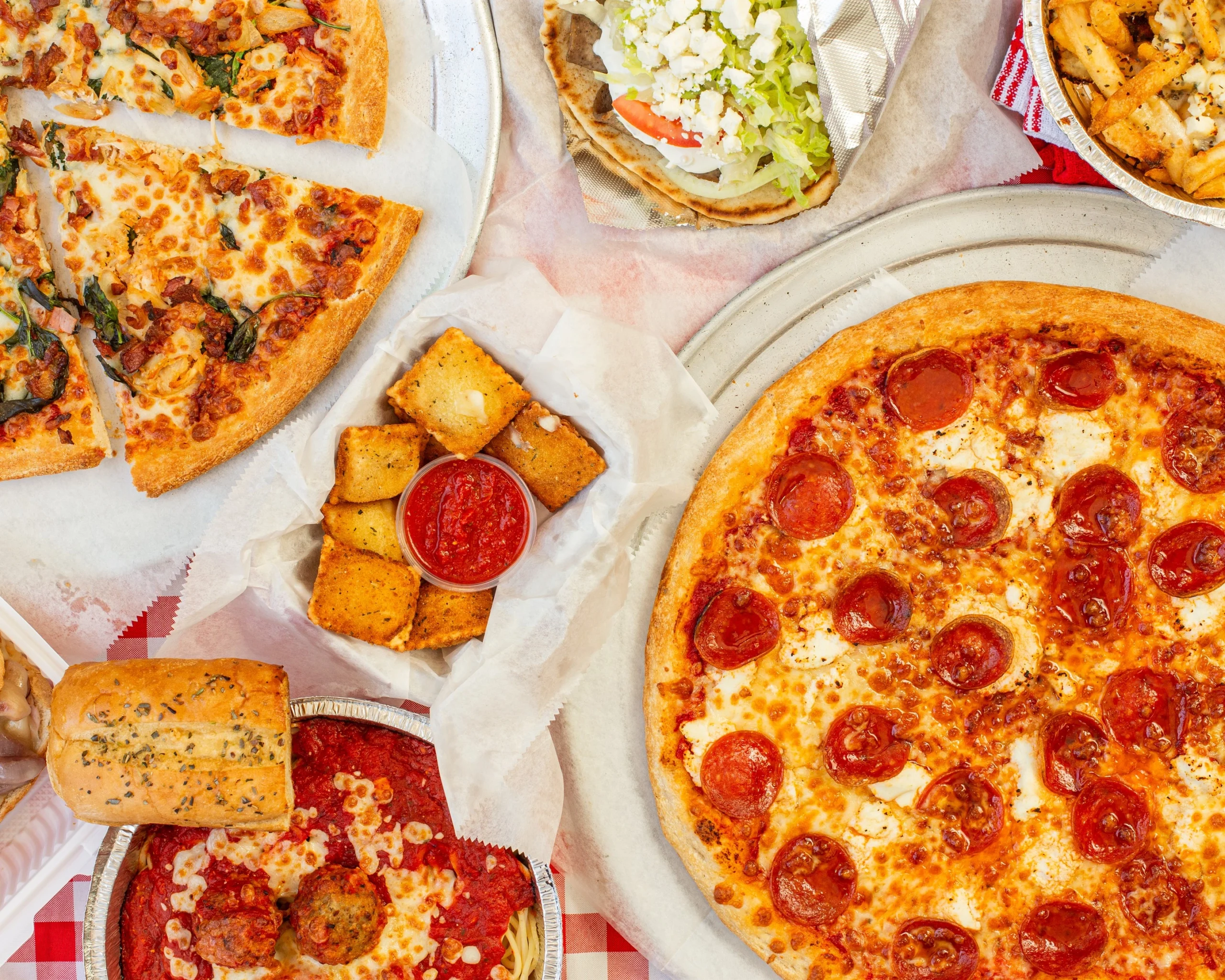
Our menu reflects how our communities eat today. And while pizza is the heart of it, we have wings, subs, salads, pasta, and Greek and Italian favorites that fill your table, whether you’re getting together with friends, ordering for the office, or grabbing something late-night. It’s all about options: delivery, pickup, or catering.
With several locations throughout Washington, D.C., and Maryland, ranging from 14th & T St NW to Georgetown, Petworth, Rhode Island Ave, and Bethesda, you can usually find a Manny & Olga’s nearby. If someone types “best pizza near me” or searches for “pizza in Washington, D.C.,” it’s likely there’s a shop just around the corner.
Pizza has been around for a long time, but the throughline is simple: keep the craft honest and convenient to enjoy. That’s what we do, and it doesn’t matter if you’re eating at your desk, on your couch, or sharing dinner with friends after a concert.
Taste the Timeline (Order Your Slice of History)
The history of pizza runs from ancient flatbreads to the markets of Naples to the modern shops and delivery routes of Washington, D.C. This is a narrative of tradition colliding with convenience. It’s the same journey that delivers hot, fresh slices to your table today. So when you think about “best pizza near me,” or you want “pizza in Washington, D.C.,” you’re partaking in a tradition that is centuries old.
If at this point you are ready for a slice with real history, hand-stretched dough, real ingredients, and pizza hot out of the oven, then you’re in the right place!
Bring the story to your table: explore Manny & Olga’s menu and start your order today.