
Steam, not just travel time, is what often turns a crisp crust soft. To prevent pizza from getting soggy during delivery, let excess steam escape, use a ventilated box, and avoid piling on moisture-heavy toppings. A quality insulated delivery bag can keep pizza warm for roughly 30 to 45 minutes, but a warm box alone won’t preserve a crisp base if steam gets trapped inside.
It’s frustrating to open the box expecting a hot, crisp slice and find a damp crust instead. The good news: small changes to packaging, timing, and how the pizza is held can make a noticeable difference in texture by the time it reaches the table.
Here, you’ll learn how delivery time affects warmth and crispness, why ventilation matters, and how foil, ovens, warming drawers, and topping choices can help or hurt. You’ll also find practical ways to keep pizza enjoyable after it arrives, without letting trapped moisture steal the crunch.
Key Takeaways
- Insulated delivery bags help retain heat, but trapped steam can still soften the crust.
- Clear delivery instructions and sensible timing can help avoid delays that affect pizza temperature and texture.
- Use foil only for short holding periods; an oven or warming drawer can help keep pizza warm until serving.
- Ventilation lets excess steam escape while the box still helps keep the pizza warm.
- Choose balanced toppings, since excess sauce and vegetables can add moisture and weigh down the crust.
1. Step 3: How Long Does Pizza Stay Warm in a Delivery Bag?
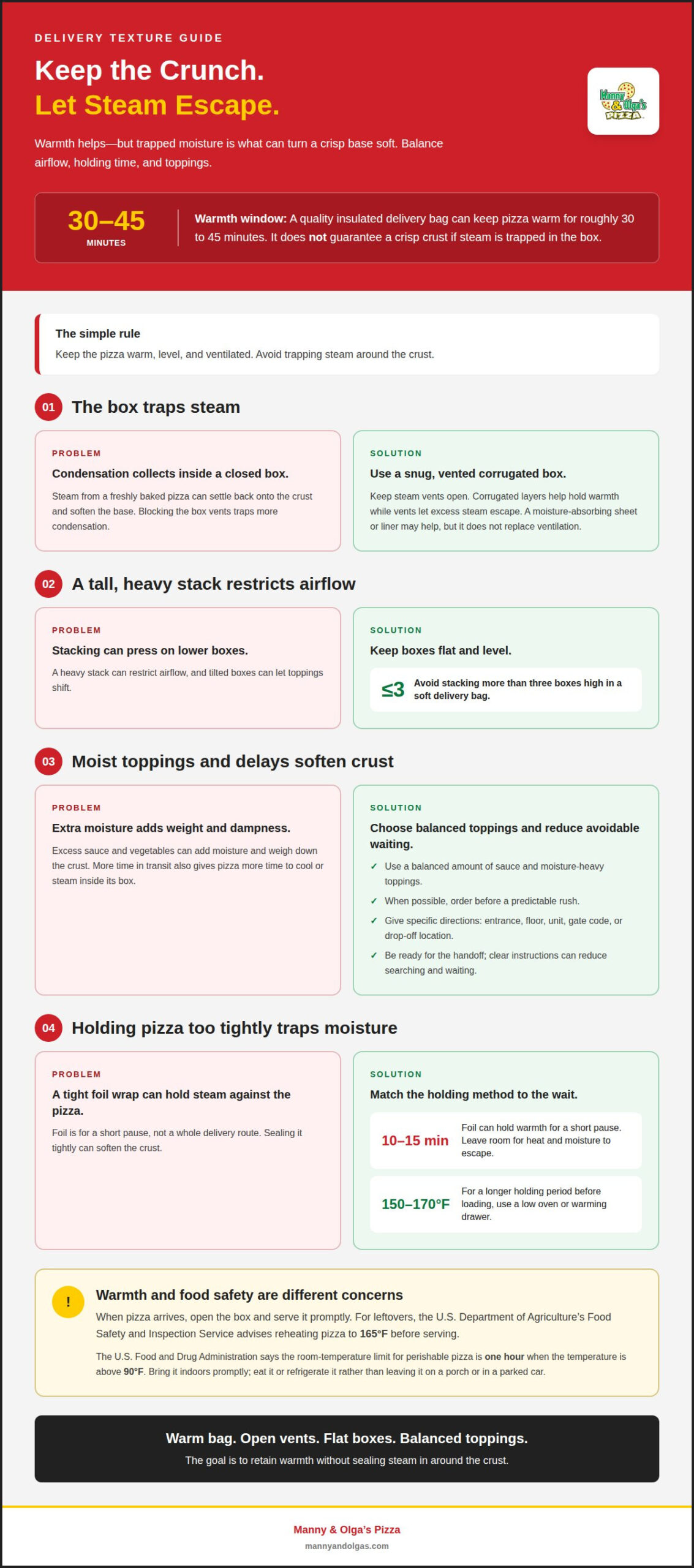
A quality insulated delivery bag can keep pizza warm for roughly 30 to 45 minutes. That window depends on the bag, the box, and how heat and steam move around the pizza. Warmth alone doesn’t protect a crust: steam from a freshly baked pie can condense inside its box, adding moisture and softening the base.
For less sogginess, use a snug corrugated pizza box with open vents. Its layers help retain warmth, while the vents give some steam a way to escape. The aim is balanced airflow, not an airtight box or an uncovered pizza. A close-fitting box also helps limit heat loss in transit.
Should pizza boxes have ventilation holes to prevent soggy crust? Yes. Keep the vents open so excess steam can escape while the box retains warmth. Vents can’t crisp a pizza that is already very moist, but blocking them traps condensation inside.
How should pizza be placed and stacked in a delivery bag? Keep each pizza flat in its box and avoid stacking more than three boxes high in a soft delivery bag. A heavy stack can press on the lower boxes and restrict airflow. Keeping the boxes level also helps prevent toppings from shifting.
What type of pizza box best prevents sogginess? A snug corrugated box with open steam vents is a practical choice. A moisture-absorbing sheet or air-pocket design may also help limit dampness under the pizza while the box retains warmth.
Do pizza box liners or inserts help keep pizza crispy? They can absorb some moisture or grease between the pizza and the box. A paper liner or ripple sheet won’t stop all steam, so use it alongside open vents rather than as a substitute.
What is the ideal temperature for keeping pizza crisp during delivery? No single temperature keeps crust crisp on its own. Heat helps maintain serving warmth, but ventilation, moisture, and time in the bag also affect texture. For a longer trip, an insulated bag and a vented box can help manage those factors.
How can restaurants keep pizza crisp during long-distance delivery? Let excess steam escape before boxing, use a vented box and liner, then carry it flat in an insulated bag. How to respond when sogginess happens at home? Open the box promptly, then reheat leftovers before serving. The U.S. Department of Agriculture, Food Safety and Inspection Service advises reheating pizza leftovers to 165°F before serving.
Pizza boxes for delivery should have open steam vents. A snug-fitting box helps retain heat, and corrugated layers can help hold warmth.
2. Delivery timing and customer instructions
Delivery time affects more than serving temperature. As pizza travels, it loses heat, and moisture from toppings can soften the crust. A shorter trip gives the pizza less time to cool or steam inside its box. Distance, traffic, order timing, and clear directions all affect the journey—principles well understood across the logistics industry by couriers like Sameday Express Inc., where efficient dispatch and routing keep transit times as short as possible.
Plan around busy periods when possible. Ordering before a predictable rush can help avoid some delays and keep the handoff moving. Off-peak ordering may also mean less traffic. Neither approach prevents every delay, but both can reduce avoidable waiting between baking and arrival.
Give clear delivery instructions when placing your order. Include the building entrance, floor, unit, gate code, or drop-off location when relevant. For example, “Use the side entrance beside the parking lot” is more helpful than “come around back.” Specific directions make it easier to find the right door without extra searching.
Longer delivery distances can mean cooler pizza by the time it arrives. Traffic adds uncertainty, especially when a route crosses busy streets or congested areas. GPS navigation can help drivers optimize routes around traffic, while delivery tracking apps may show progress and send an alert when the order is on its way. Use those updates to be ready at the door, rather than letting a delivered pizza sit unattended.
Warm weather brings a separate food-safety consideration. The U.S. Food and Drug Administration says the room-temperature limit for perishable pizza shrinks to one hour when the temperature is above 90°F. Bring the order indoors promptly, then eat it or refrigerate it rather than leaving it on a porch or in a parked car.
What if the arrival time shifts? Keep your phone nearby for delivery updates and make sure the driver can reach the drop-off point. If the building has multiple entrances, name the correct one. For a group order, choose someone who can meet the delivery. These steps reduce time spent waiting outside or locating the recipient.
Timing starts before the trip. A delay between baking and pickup gives a hot pizza more time to cool, and a longer drive extends that cooling period. Ordering before a predictable rush and entering precise instructions can help the handoff go smoothly. When the pizza arrives, open the box and serve it promptly so heat and moisture don’t linger around the crust.
At checkout, make the drop-off details specific enough to distinguish the intended destination from nearby entrances or addresses. Clear delivery instructions can help prevent time being lost while the driver searches for the address. GPS systems can help drivers avoid traffic and reduce delivery times by optimizing routes. Delivery tracking apps can provide real-time updates on a pizza’s journey and send alerts when it is on its way. Checking an alert can help the recipient be ready for the handoff, while precise directions support a smoother final approach.
3. Foil, ovens, and warming drawers
Foil, an oven, and a warming drawer all hold heat differently, and each can affect crust texture. Foil is best for a short pause, not an entire delivery route. It holds warmth around a single pizza for about 10 to 15 minutes, but a tight wrap can also trap steam. If the pizza needs to wait, leave room for heat and moisture to escape rather than sealing it tightly.
For a longer holding period before loading, use a low oven or warming drawer. A low oven set around 150°F to 170°F can hold pizza for up to 20 minutes before delivery. Keep the pizza on a tray or oven-safe surface, and avoid covering it tightly. The aim is to retain serving warmth without enclosing the crust in its own steam.
Holding pizza too long in an oven can dry it out. After 20 to 30 minutes, the crust and toppings may lose moisture and become less pleasant to eat. Use a timer, and move the pizza into its delivery box when it’s ready to go. A warming drawer or oven can also keep delivered pizza hot until serving, but don’t leave it there indefinitely.
For a brief wait between baking and handoff, foil may help keep a small order warm. For several pizzas, a heated cabinet is more practical when staging more than four or five pies at once. Arrange them so heat can circulate, and keep coverings from pressing against the toppings. Tightly wrapping a stack of pizzas can trap moisture and soften the crust underneath.
Restaurants can also select an oven suited to delivery. An air impingement oven produces a drier pizza than a typical deck oven, which can make the crust better suited to delivery and carryout. A drier surface has less excess moisture to soften the crust while the pizza waits.
At home, reheat delivered pizza in an oven when you want the base to regain some crispness. Arrange the slices without folding or crowding them, then warm until the cheese and crust are hot. A microwave is quicker, but may leave the base softer. Choose the oven when texture matters more than speed.
Match the holding method to the wait: use foil for 10 to 15 minutes, an oven or warming drawer for a controlled short hold, and a heated cabinet for staging more than four or five pies. Keep an eye on the clock, since 20 to 30 minutes in an oven can dry pizza out. Let heat escape naturally rather than sealing in steam.
4. Pizza box ventilation to release steam
A pizza continues to release steam after it leaves the oven. If a hot pie goes straight into a closed box, vapor can condense on the lid and sides and add moisture back to the crust. Ventilation gives steam a way out. The goal isn’t to cool the pizza completely, but to balance airflow with heat retention during the trip.
Start before boxing. Let a freshly baked pizza rest on a wire cooling rack or pizza screen for about 30 seconds, and up to one minute, so steam can escape. Then cut and box it. This brief pause helps reduce the burst of vapor trapped at packing, especially when the crust is still steaming.
Use the vents built into the pizza box and keep them open. Don’t cover them with tape or let an outer wrap block the openings. Airflow helps moisture escape, while the cardboard box still protects the pizza and retains warmth. A fully sealed box can hold more steam against the crust.
Box design matters, too. A snug corrugated box helps hold heat, and its vents let excess steam escape. Air pockets or moisture-absorbing sheets may help keep the base from becoming damp. A paper liner beneath the pizza can absorb some moisture, but shouldn’t block the vents.
Think of the box as a controlled environment, not an airtight container. Too little airflow lets condensation collect; too much exposure lets heat escape faster. A vented box helps balance the two, especially when the pizza has just come from the oven. Keep the lid closed during transport and leave the vents unobstructed.
At home, open the box soon after delivery rather than leaving a hot pizza sealed inside. If you’re serving it right away, transfer slices to plates so steam doesn’t continue collecting beneath them. For leftovers, refrigerate them instead of keeping the box closed on the counter. The U.S. Food and Drug Administration says perishable pizza shouldn’t sit at room temperature for more than two hours.
Vents help manage moisture, but they can’t remove water released by sauce or toppings. Open vents, a brief cooling pause, and a liner beneath the pizza can work together. A pizza boxed immediately after baking has less time to release steam before packing, even if the carton is vented. Combine suitable packaging with careful handling to help preserve the crust’s texture.
5. Balancing toppings to prevent sogginess
A crisp delivery crust starts with a balanced layer of toppings. Extra sauce and vegetables add moisture, while too many toppings weigh down the dough and hold in heat. The pizza can keep steaming after baking, softening the base before it reaches the table. If you’re wondering how to prevent pizza from getting soggy during delivery, choose enough sauce and vegetables for flavor without piling them on.
Consider how the ingredients behave in the oven. A generous layer of sauce beneath a heavy pile of vegetables adds moisture in two places. Spread sauce evenly instead of letting it pool in the center, and distribute toppings so no section is much heavier than another. A balanced surface helps the pizza bake evenly and makes slices easier to lift.
A thin coat of oil on the dough before adding sauce and toppings may slow moisture from reaching the crust. Apply it lightly across the surface, then add toppings in an even layer. Oil doesn’t remove moisture, so sensible portions still matter.
Crust preparation also affects how toppings perform during delivery. Excess sugar in pizza dough can make the crust brown faster, shortening its baking time and affecting crispness. Sugar can also draw moisture from the crust and its surroundings. Baking the pizza thoroughly helps develop a firmer crust that can better handle moisture from sauce and toppings.
Very high baking temperatures can brown the outside quickly while leaving only a thin crisp layer. That delicate surface may soften quickly as it absorbs moisture. When baking a delivery pizza, consider the whole bake rather than judging doneness by color alone. A thoroughly baked crust can provide better structure beneath the toppings, while an overly quick bake may leave the base more vulnerable.
Before baking, check for pooled sauce, crowded vegetables, or a dense mound in the center. Spread ingredients evenly toward the edge without covering the crust rim, and reduce excess sauce or vegetables as needed. A thinner, evenly distributed layer is less likely to weigh down one slice than a concentrated heap.
Crust and toppings work together. A lightly oiled dough surface, restrained moisture, and a full bake can help maintain a firmer base during delivery. If you’re still asking how to prevent pizza from getting soggy during delivery, start with a balanced topping layer. For your next pizza night, browse pizza options for delivery and pick a topping balance that suits your appetite.
Manny & Olga’s Pizza
Manny & Olga’s Pizza serves pizza for delivery and carryout in Washington, D.C., and Maryland, including areas such as Bethesda, Wheaton, Silver Spring, Petworth, H St NE, Hill East, Georgetown, and Foggy Bottom. The menu includes Cheese Pizza, Pepperoni Pizza, Manny’s Special Pizza, and Meat Lovers Pizza. For a crisper result, consider the topping balance and moisture tips above, then open the box and serve the pizza soon after it arrives. Choose a style that sounds good and keep the box vents open during the trip. Order from Manny & Olga’s Pizza online or by phone.
Make Your Next Pizza Night a Good One
Make your next order part of the occasion, whether you’re planning a relaxed dinner, sharing food with family, or settling in for a movie. Decide what sounds good, get everyone ready to eat, and enjoy the first slice while it’s warm. A little planning helps the meal feel easy from the first bite.
Knowing how to prevent pizza from getting soggy during delivery can make the meal more enjoyable, but the best order is still the one everyone looks forward to. Manny & Olga’s Pizza offers Cheese Pizza, Pepperoni Pizza, and Manny’s Special Pizza, from familiar favorites to a distinctive house option.
Ready to choose your next pie? Contact Manny & Olga’s Pizza to talk about your order. Pick a favorite, gather around, and make room for a fresh, satisfying meal.
Frequently Asked Questions
Step 3: How Long Does Pizza Stay Warm in a Delivery Bag?
A quality insulated delivery bag can keep pizza warm for roughly 30 to 45 minutes. That estimate describes warmth, not a guarantee that the crust stays crisp for the same period. A pizza’s starting temperature, the bag’s insulation, and how often it’s opened all affect heat retention. For the best texture, plan to serve the pizza soon after it arrives rather than treating the bag as long-term storage.
How does steam make pizza soggy during delivery?
Steam carries moisture away from a hot pizza, and a closed box can trap that vapor. As the box cools, some moisture condenses inside and can settle back onto the crust. Imagine a hot slice in a tightly closed carton: the base gradually absorbs dampness instead of staying dry. Ventilation and prompt serving help limit that contact with moisture.
How long can pizza stay in a delivery bag before the crust gets soggy?
There’s no universal sogginess cutoff: crust texture changes with moisture, toppings, packaging, and travel conditions. A lightly topped pizza in a well-ventilated box can behave differently from a heavily topped pie in a closed carton, even during similar trips. The 30-to-45-minute warmth estimate for an insulated bag isn’t a crispness timer. Open the box once the pizza arrives and serve it rather than leaving it enclosed.
How do toppings and sauce affect pizza sogginess during delivery?
Extra sauce and moisture-rich toppings can release water as the pizza bakes, while a heavy layer presses down on the crust. A slice with pooled sauce and crowded vegetables may feel softer underneath than one with an even, restrained layer. Choose a balanced amount of sauce and toppings when ordering, and serve the pizza soon after delivery to enjoy its texture.


