
Feeding a crowd works best when the pasta portion fits the whole menu, not just the guest count. For a pasta-tray catering platter in Tenleytown, DC, estimate servings by considering how many people are coming, what else you’ll serve, and how long the gathering will last. A working lunch may need a different spread when guests have only 30 minutes between calls.
Planning food for a group can feel like a balancing act: you want enough to go around without making pasta the only thing on the table. To plan a pasta tray catering platter in Tenleytown, DC, consider the event, the other dishes, and how the food will be served.
Here, you’ll learn how to plan party-sized pasta portions, build a spread for lunches and celebrations, and prepare useful details for a catering order. We’ll also cover how to estimate quantities and organize the handoff so the food is ready when guests are.
Key Takeaways
- Estimate pasta portions by weighing the guest count against the other dishes on the menu and the length of the gathering.
- Build a balanced spread with pasta, salad, and complementary dishes suited to the occasion.
- Make a catering inquiry more useful by sharing the guest count, event time, other food, gathering length, and dietary needs.
- Plan the serving setup and food timing ahead so the meal is ready when guests are.
Party-sized pan portions
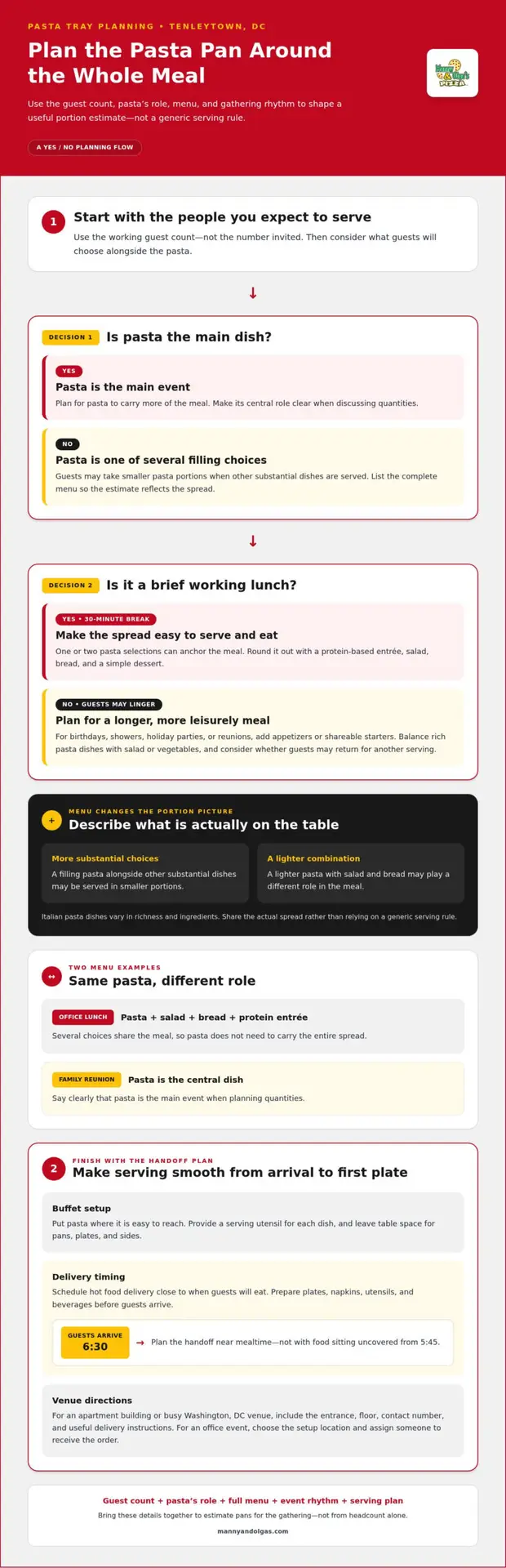
A party-sized pasta pan doesn’t have a fixed serving count for every gathering. The amount you need depends on the guest count, whether pasta is the main dish, what else is being served, and how long people will be eating. Start with the menu, then estimate how much pasta guests are likely to choose alongside the other dishes.
For a working lunch, consider the schedule as well as appetite. If guests have only 30 minutes between calls, they need a spread that’s easy to serve and eat without a long pause. One or two pasta selections can anchor the meal, with a protein-based entrée, salad, bread, and a simple dessert rounding it out.
For birthdays, showers, holiday parties, and reunions, guests may linger over the meal. Add appetizers or shareable starters, then balance rich pasta dishes with salad or vegetables. If pasta is one of several substantial dishes, guests may take smaller portions; if it’s the main event, plan for it to carry more of the meal.
Use this practical planning sequence before choosing pan quantities:
- Set the guest count. Use the number of people you expect to serve, rather than the number invited.
- Decide pasta’s role. Mark it as the main dish, one of several entrées, or a side alongside other filling foods.
- List the other dishes. Note whether the menu includes a protein-based entrée, salad, bread, appetizers, or dessert.
- Consider the event rhythm. A brief lunch break calls for a different setup than a gathering where guests can return for another serving.
- Share those details in your inquiry. The guest count and complete menu help shape a useful portion estimate.
Consider a specific example. At an office lunch, pasta, salad, bread, and a protein entrée give guests several choices, so pasta doesn’t need to carry the entire meal. For a family reunion where pasta is the central dish, make that clear when planning quantities.
Italian pasta dishes vary in richness and ingredients, so the menu affects how guests serve themselves. A filling dish alongside other substantial choices may be served in smaller portions. A lighter pasta paired with salad and bread may play a different role. Describe the actual spread rather than relying on a generic serving rule.
Serving style matters, too. For a buffet, place the pasta where it’s easy to reach and provide a serving utensil for each dish. Leave enough table space for pans, plates, and sides. For an office event, choose the setup location and assign someone to receive the order before the food arrives.
Timing also shapes the experience. Schedule hot meal delivery close to when guests will eat. For example, if guests arrive at 6:30, plan the handoff so food isn’t sitting uncovered from 5:45. Prepare plates, napkins, utensils, and beverages before arrival, so serving can begin smoothly.
For a Tenleytown apartment building or busy Washington, DC, venue, include the entrance, floor, contact number, and useful delivery instructions in your event details. Clear directions help the handoff reach the right setup area. With the guest count, menu, schedule, and serving plan in hand, you can estimate pasta pans for the gathering rather than guessing from the headcount alone.
Catering inquiries
A clear catering order starts with the event details. For a pasta tray catering platter in Tenleytown, DC, share the guest count, event time, other food, and how long the gathering will last. These details help shape an order around the occasion, whether it’s an office lunch, family celebration, or community gathering.
Start with the number of guests you expect to serve. Use the working headcount, not the invitation list, and mention if attendance may change. Then explain pasta’s role in the meal. A pasta dish served alongside other entrées calls for a different estimate than pasta planned as the main meal.
Include when guests will eat, not just when the event begins. A reception may start before the meal, while an office lunch may have a set break. If guests will arrive in waves, describe the schedule. Timing gives the order discussion context and helps you plan a practical serving arrangement.
Describe how long the gathering will last. Guests at a short meeting may eat together, while people at a reunion may take food at different times. Explain whether the meal will be served all at once or remain available as guests arrive. That detail can shape your serving plan and portion estimate.
Prepare these details before making your inquiry:
- Guest count: Share how many people you expect to eat.
- Event schedule: Say when food should be ready and how long guests will gather.
- Other dishes: Mention planned appetizers, salads, bread, entrées, or desserts.
- Dietary needs: Communicate allergies and other dietary requirements when placing the order.
- Venue directions: Give the address and instructions for reaching the serving area.
Be direct about allergies and dietary needs. Identify the guests who need an accommodation and describe their concern. Share relevant details while placing your order so the conversation can focus on the needs involved. Specific information is more useful than a general note about dietary preferences.
List the complete menu, including dishes you’re arranging separately. If pasta will be served with salad, bread, and another entrée, name each item. If pasta will be the main dish, say so. A detailed menu gives the caterer a clearer picture of how guests will choose and serve the food.
For a pasta tray catering platter in Tenleytown, DC, venue directions help organize the handoff. Apartment buildings and busy Washington venues may require an entrance, floor, contact number, or other useful instruction. For office catering, assign someone to receive the order and specify the setup location, such as a conference room.
Plan the serving area while preparing your order. Decide where the pans will go and how guests will move around them. Set out plates, napkins, utensils, and beverages before the food arrives. One person can receive the order while another readies the table, keeping setup organized.
Before placing your order, read the delivery details from the perspective of someone unfamiliar with the venue. Can they find the entrance, reach the right floor, contact the host, and locate the serving area? Complete directions make the handoff clearer, especially for pasta tray catering platters in Tenleytown, DC.
Ready to discuss your gathering? Use the catering information and share your guest count, schedule, menu, dietary needs, and delivery directions.
How should pasta catering trays be stored and reheated for an event?
Plan pasta tray storage around the time guests will eat, the serving location, and the instructions supplied with the food. Keep the pans covered while they wait, and set out a clear handoff plan. For a 6:30 gathering, arrange delivery close to mealtime rather than leaving food uncovered from 5:45.
Choose a place for the trays before they arrive. A stable surface near the serving area keeps the pans accessible without crowding plates, utensils, or other dishes. At an office, name the person receiving the order and the setup location in advance. At an apartment venue, include the entrance and floor in the delivery directions.
Keep packaging intact until you’re ready to serve, or follow the handling directions provided with the order. If the food arrives before the event, decide where it will wait and who will manage it. Don’t leave covered pans in a busy hallway or on a surface guests need for other tasks.
Reheating depends on the pan and the instructions supplied for that food. Check the packaging before using an oven, microwave, or other appliance. A large catering pan may not fit safely or evenly in every appliance. Never assume a serving container is also suitable for reheating.
Use this sequence to prepare the serving area:
- Confirm the meal time. Set the delivery and setup plan around when guests will eat.
- Choose the location. Clear a stable surface near the plates and serving utensils.
- Read the package directions. Follow the stated storage and reheating instructions for each pan.
- Assign a host. Give one person responsibility for receiving the order and organizing the food.
- Set up before arrival. Place plates, napkins, utensils, and beverages within easy reach.
For a conference-room lunch, arrange for someone to receive the order, clear a serving table, and plan for the food’s arrival. If the meal starts after a meeting, coordinate the handoff with the schedule. The host can then prepare the table without opening pans early or interrupting the gathering.
For a home celebration, separate the serving surface from the food-preparation area. Put plates and napkins where guests can reach them without crowding the trays. Keep each pan’s instructions nearby if reheating is part of the plan. This helps the host handle the food as directed.
When several dishes need attention, identify which ones require reheating and when. Follow the directions for each dish instead of applying one method to every pan. If a container’s instructions don’t allow a particular appliance, transfer the food only as directed. Leave enough room for pans and serving tools.
Once serving begins, keep the setup orderly. Return serving utensils to their dishes and keep lids nearby to cover pans between servings. If guests are eating in shifts, assign a host to manage the display and keep a clear path around the table. A simple setup helps prevent a crowded buffet.
For a pasta catering order in Tenleytown, include the event time and setup details in your inquiry. Share when guests will eat and where the pans should go. These details help coordinate the handoff; use the catering inquiry page to get started.
If the instructions don’t clearly explain whether a container can be reheated, don’t assume it’s suitable for an appliance. Keep the package directions with the pans so the host can refer to them when the food is ready. Follow the directions for each dish rather than treating every tray alike. Settling the receiving and serving plan in advance also lets the host focus on handling the food as directed.
Portion planning starts before the food arrives. When estimating portions, give the caterer the guest count, event time, details about other food, and the gathering’s duration. These details connect the amount ordered to the meal plan and how long guests will be eating. Before delivery, prepare space for serving dishes and set out utensils, plates, napkins, and beverages. Keep the serving area clear enough for the trays, and make sure the person receiving the order knows where the food should go. With these arrangements in place, the host can receive the order, keep each pan’s directions handy, and organize service around the planned meal time.
Manny & Olga’s Pizza: Cheese Pizza
Manny & Olga’s Pizza can round out a pasta-centered gathering with Cheese Pizza, a familiar option for guests who want another hearty choice. Add Pepperoni Pizza, Manny’s Special Pizza, or Meat Lovers Pizza to bring different flavors to the table. A mix of pizzas can complement the pasta and suit varied appetites.
For a simple menu, pair pasta with Cheese Pizza and a salad. For a broader spread, choose additional pizza options to suit your guests and the other food you’re serving. Manny & Olga’s offers catering for events, with fast and affordable service and easy ordering. Share your event details when placing an order so the menu fits your gathering.
Visit Manny & Olga’s Pizza to explore the menu and get in touch about catering.
Make Your Gathering Easy to Plan
Your menu can set the mood before guests take their first serving. For a pasta tray catering platter in Tenleytown, DC, consider which dishes will make the meal feel complete and give guests an easy choice. A familiar pizza option complements pasta and brings another crowd-friendly flavor to the table.
Manny & Olga’s Pizza offers Cheese Pizza, Pepperoni Pizza, and Manny’s Special Pizza. Choose a combination that suits your event menu, then share your gathering details as you plan your order. A clear request helps match your food choices to the occasion, whether you’re organizing a casual get-together or a meal for colleagues.
Ready to discuss catering for your gathering? Contact Manny & Olga’s Pizza and take the next step toward a table everyone can enjoy. Your event starts with a good plan, and the menu is a delicious place to begin.
Frequently Asked Questions
Feeding a Crowd?
For a crowd, choose a catering menu that gives guests satisfying options without guessing how many portions a pan yields. Manny & Olga’s Pizza offers catering and Party Platters for gatherings, with affordable catering options. Consider whether guests will eat together or arrive in waves, since staggered arrivals can affect how you serve the meal. A clearly labeled menu also helps guests quickly spot the dishes they want.


