
What does a smooth office lunch take besides good food? Office catering for Washington, DC teams can bring a meal to the workplace, with delivery, setup, serving supplies, and service options shaped around the occasion. And when the calendar is packed, having the food side planned can make the workday feel easier.
You want a spread that’s satisfying, convenient, and suited to the team, whether it’s lunch during a busy workday or food for a company gathering. This guide explains what office catering can include, from choosing meals and arranging delivery to understanding setup and serving options. You’ll get a clearer picture of the choices involved and how to match them to your office’s needs, so planning the meal feels straightforward from the first decision to serving time.
Key Takeaways
- Plan delivery and setup around your office schedule, space, and the way your team will serve the meal.
- Choose a service style that fits the event, from a simple food drop-off to more involved catering support.
- Compare caterers by menu fit, logistics, and what’s included, not just by the food selection.
- Clarify serving supplies and staffing needs so the meal is ready to enjoy without last-minute scrambling.
- Match the menu to your gathering, with options such as pizza, subs, salads, and party platters.
Delivery, setup, staffing, and bar service
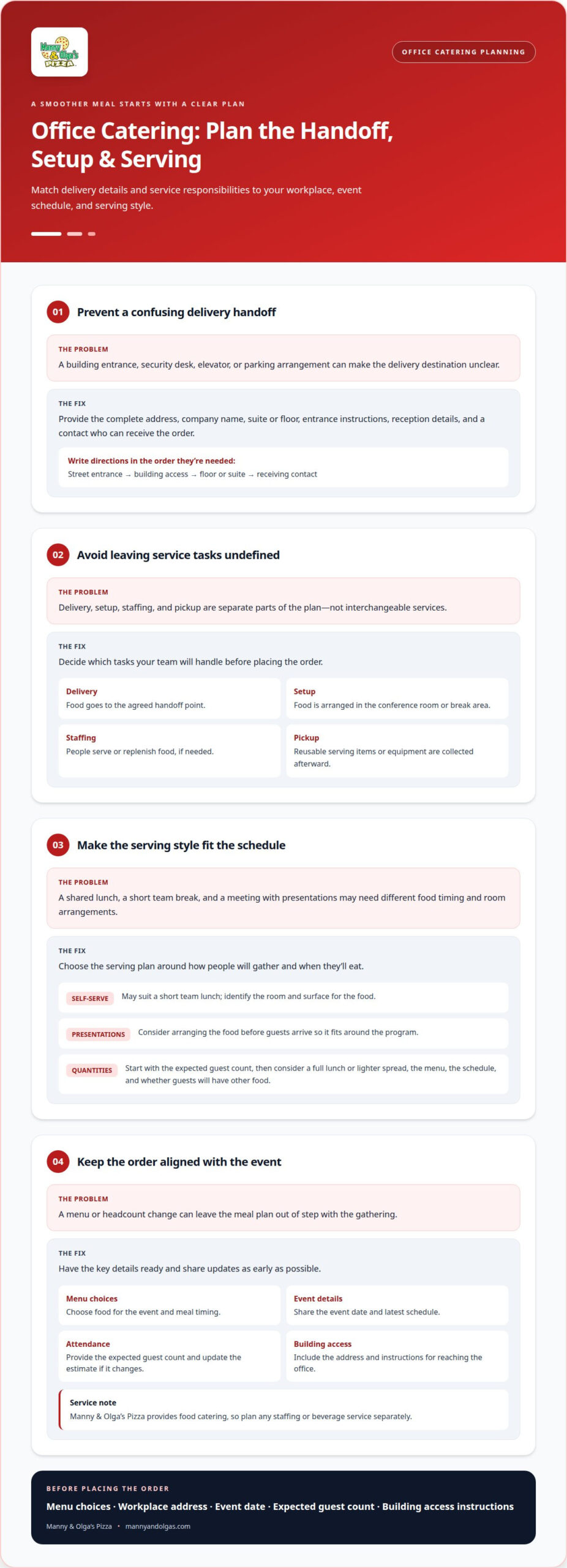
For an office meal in Washington, D.C., provide the full delivery address and any building entry instructions. Include the company name, suite or floor, reception details, and a contact who can receive the order. A downtown office with a security desk may need different handoff instructions than a Bethesda workplace with a street-level entrance.
Delivery, setup, staffing, and pickup are distinct parts of event planning. A drop-off order brings food to the agreed handoff point; setup means arranging it in a conference room or break area. Staffing involves people serving or replenishing food, while pickup covers equipment or serving items afterward. Decide which tasks your team will handle before placing the order.
When ordering online, have the key details ready: menu choices, workplace address, event date, expected guest count, and building access instructions. For example, an office in Silver Spring can include its suite number, entrance, and reception contact in the delivery information.
- Delivery: Give the complete address, entrance, floor, and receiving contact.
- Setup: Identify the room and surface where the food should be placed.
- Staffing: Decide whether guests will serve themselves or need assistance.
- Pickup: Explain where reusable serving items should be collected.
Washington, D.C. traffic, parking access, elevators, and building security can affect a delivery handoff. Give directions in the order someone will need them, from the street entrance to the office. For Bethesda, Wheaton, and other Maryland communities, provide the exact address and building instructions so the delivery destination is clear.
For changes to an order, share updates as early as possible, especially if the guest count or menu changes. Include the latest event schedule and attendance estimate when arranging the catering so the meal plan reflects the gathering.
To plan food quantities, start with the expected guest count and decide whether you’re serving a full lunch or a lighter spread. Consider the menu, event schedule, and whether guests will have other food. A shared pizza lunch, for instance, calls for a different plan than a meal with several dishes and sides.
Match the serving plan to the event’s schedule. A self-serve setup may suit a short team lunch, while a meeting with presentations may work better if food is arranged before guests arrive. Manny & Olga’s Pizza provides food catering, so plan any staffing or beverage service separately.
Philadelphia office and corporate caterer comparison
For a Washington, D.C. workplace, compare office catering providers by matching the service to the event, not by menu alone. A working meeting may need food guests can serve quickly, while a corporate reception may call for a broader spread and more coordination. Start with the event’s purpose, schedule, location, and guest count. Then compare menu fit, delivery arrangements, setup, serving supplies, and staffing options.
An office meeting has different needs from a team lunch. A short conference-room break calls for food that’s easy to portion and eat between agenda items. A longer lunch may suit a mix of main dishes and sides, with choices for varied preferences. Consider how attendees will arrive and whether the group will eat together or in shifts.
Corporate events also vary in format. A client presentation, staff celebration, and holiday gathering each have different timing and hosting needs. For a presentation, schedule the meal around the program so it doesn’t interrupt speakers. For a holiday event or party featuring interactive entertainment from Full House Casino Events, consider menu variety and a layout that lets guests mingle. Choose an arrangement that suits the occasion and available space.
Use the same criteria to compare options:
- Menu: Consider the occasion, meal timing, and guest preferences.
- Service: Distinguish food drop-off from setup or on-site staffing.
- Logistics: Compare arrival plans, building access, and handoff details.
- Supplies: Identify serving items provided and those the office needs.
- Changes: Understand how adjustments to the menu or headcount are handled.
Business catering can be as simple as a staff meal or as planned as a company event. A recurring meeting may benefit from a familiar menu and a repeatable ordering process. A one-time celebration may call for a broader selection and a serving plan suited to the venue. List the event’s requirements first, then compare each option against them.
For a holiday gathering in Washington, D.C., consider how the room will be used and when guests will eat. A reception with staggered arrivals needs an accessible food setup; a scheduled team lunch can center on a shared break. Aligning the meal with the program helps it feel like part of the event, not a distraction.
For an office gathering, explore menu ideas for office gatherings from Manny & Olga’s Pizza and consider which format suits the occasion.
Included and optional serving supplies
Serving supplies determine whether lunch is ready to eat or requires office staff to fill the gaps. Make a written list based on the menu and setup: plates, napkins, forks, serving utensils, and leftover containers. A salad spread needs serving spoons, while individually portioned meals may need fewer shared utensils.
The right serving setup depends on the order and how your team plans to serve the food. List what the event needs before ordering, then include those details in the plan. For a conference-room lunch, decide whether guests will use individual place settings or a shared serving station.
- For shared dishes: Plan serving spoons, tongs, plates, and napkins.
- For individual portions: Consider forks, knives, napkins, and labeled containers.
- For leftovers: Decide whether storage containers are needed and where they’ll go.
Offices may have limited counter space or shared break rooms. Match the serving setup to the room: a narrow table suits compact containers better than a wide buffet layout. If guests will eat at their desks, individual portions can reduce congestion around a serving area. Leave room for drinks and meeting materials, too.
Planet-friendly choices start with the event’s practical limits. Reusable plates and serving utensils can reduce single-use items when the office has washing facilities and time for cleanup. For a quick meeting, a simpler setup may work better. Choose packaging that suits the food, keeps it secure during delivery, and avoids unnecessary extras.
Vegetarian and vegan are different menu needs. A vegetarian meal excludes meat, while a vegan meal also avoids animal-derived ingredients such as dairy and eggs. A vegetable-based dish, for example, may still contain cheese or a creamy dressing. Specify the dietary need and keep those meals distinct from other dishes during serving.
Labels help colleagues choose with confidence. Mark vegetarian and vegan dishes, and identify common ingredients such as cheese, eggs, or dressing. For a mixed office lunch, place labels beside each dish rather than relying on a single menu sheet. This makes the serving line easier to navigate during a busy break.
Before the order is finalized, use a short supplies checklist: serving format, plates and utensils, dietary labels, and leftover handling. A Center City meeting with shared salads needs different tools than a desk lunch with individual portions. Matching supplies to the menu, room, and cleanup plan keeps the meal organized without adding clutter.
Catering availability for offices and businesses
Office teams in Washington, D.C. and Maryland can plan catering for workplace meals and business gatherings. Availability depends on the event address, delivery timing, menu, and service format. Start with the exact workplace location, then match the order to the meeting or event schedule. A recurring team lunch and a one-time client gathering may need different arrangements.
When arranging catering, provide the office street address, building entrance, suite or floor, event date, and preferred arrival time. Add the expected guest count and whether the food is for self-service or a hosted event. These details clarify the delivery requirements, including reception access or a designated drop-off point.
Consider the event type before choosing a format. A staff meeting may need a straightforward meal for a short break. A training session may call for food that stays accessible as guests move in and out. A company celebration may suit a broader menu and planned serving area. Each format affects the space and coordination the order requires.
Businesses can make the planning process clearer by organizing the details in advance:
- Location: Record the full office address and any entry instructions.
- Schedule: Set the meal’s arrival time around presentations, breaks, or guest arrivals.
- Headcount: Use the latest attendee count to guide the meal plan.
- Format: Decide whether guests will share dishes or receive individual portions.
- Dietary needs: Identify vegetarian or other meal preferences when planning the menu.
For an office in Washington, D.C. or Maryland, the full delivery address helps establish whether it falls within the service area. A business name or nearby landmark alone isn’t enough. Include the address and building access details together, especially for an office in a multi-tenant building.
Timing also shapes the plan. A weekday team lunch tied to a meeting needs a clear arrival time. A reception with guests arriving throughout the event may need a different serving arrangement. Share the schedule, meal format, and setup needs together, rather than treating delivery as the only consideration.
The key takeaway: workplace catering works best when you consider the address, timing, headcount, and serving format together. A Maryland office hosting a training lunch, for example, should plan around both building access and the break schedule. That gives the meal a clear destination, purpose, and serving plan.
What office catering services are available near me?
For workplaces in Washington, D.C. and Maryland, catering arrangements depend on the delivery address and meal format. A team lunch may suit a ready-to-serve food order, while a company gathering may call for a wider selection. Start with the office address, then plan around the occasion, guest count, and serving setup.
Most workplace meals fit a few practical formats. A drop-off order suits a meeting where staff can arrange and serve the food themselves. A shared spread works for a team lunch with a common break time. Individual portions can suit a training session where guests arrive or eat at different times. Let the room and agenda guide the choice.
Distance alone doesn’t determine whether a delivery plan will work. A downtown office in a multi-tenant building may have a reception desk, loading area, or access instructions. A Maryland business park may use a different entrance and handoff point. Include the full street address and building details in the order information.
Use this quick planning sequence to narrow the options:
- Set the occasion, such as a staff lunch, client meeting, or workplace celebration.
- Choose a serving format that matches the schedule and room layout.
- Estimate attendance and identify dietary preferences for the menu.
- Include the address, entrance, floor, and delivery contact details.
- Plan where food will be placed and how guests will serve themselves.
For a simple lunch, familiar main dishes and sides can make serving straightforward. For a longer meeting, choose food that remains easy to access during scheduled breaks. A company celebration may call for a more varied selection and space for guests to gather and serve themselves. Each format changes the menu, timing, and setup priorities.
For a Washington, D.C. workplace, match the food order to the office’s actual setup. A conference room with limited counter space needs a compact serving plan; a shared kitchen can accommodate a larger spread. The delivery address, event schedule, and serving style together determine what’s practical.
Ready to plan a meal for your team? Explore catering options for your office and choose a format that fits the gathering.
Manny & Olga’s Pizza: Catering
Manny & Olga’s Pizza offers catering for office meals and business gatherings. For a team lunch, choose favorites such as Cheese Pizza, Pepperoni Pizza, or Manny’s Special Pizza. A shared pizza spread suits a casual meeting, staff lunch, or workplace celebration where guests can serve themselves.
Consider the event schedule and serving setup as you choose the menu. A straightforward order keeps planning focused on the meal, while your office handles the serving arrangements. Manny & Olga’s Pizza is a practical choice when you want catered food for a workplace gathering without full-service table dining.
Contact Manny & Olga’s Pizza to discuss catering for your office.
Make the Next Team Meal Easy to Plan
Decide what you want colleagues to get from the gathering, then choose food that fits. A relaxed team lunch may call for familiar favorites, while a meeting may suit a simple shared meal that keeps attention on the conversation. A useful office catering plan starts with the occasion and the people attending.
Manny & Olga’s Pizza offers Cheese Pizza, Pepperoni Pizza, and Manny’s Special Pizza for workplace gatherings. These choices make it easy to build a familiar spread around the team’s plans. Keep the next step simple: settle on the occasion and the menu direction, then arrange catering that suits your office.
Contact Manny & Olga’s Pizza to plan catering for your next workplace meal. Bring everyone together over a warm, satisfying spread and make the gathering one your team can look forward to.
Manny & Olga’s Pizza for Office Catering
Manny & Olga’s Pizza offers catering for office meals, meetings, and group gatherings. For coworkers, you can choose from pizza, subs, salads, wings, pasta dishes, party platters, and desserts.
Options include Cheese Pizza, Greek Salad, Steak & Cheese Sub, Chicken Parmesan with Spaghetti, Baklava, and Gluten Free Pizza. Choose Manny & Olga’s Pizza to plan an office meal around the dishes your group prefers.
Frequently Asked Questions
Do you deliver to my office?
Delivery and catering serve Washington, D.C. and listed Maryland communities, including Bethesda, Wheaton, Silver Spring, Kensington, and Takoma Park, as well as D.C. neighborhoods such as Georgetown, Foggy Bottom, Petworth, Capitol Hill, and H St NE. For office catering, provide the full office address and building entrance when arranging food so the delivery destination is clear.
How do I request a catering quote?
Request catering through online ordering, “TEXT TO ORDER,” or by calling ahead. Include the event date, office address, expected guest count, and preferred dishes. Note whether you’re planning a shared pizza lunch or a gathering with party platters. These details give the order a clear scope and help shape a quote around the food and event you have in mind.
What is the minimum order and lead time?
Minimum order and lead time depend on the menu and event arrangements. Start by setting the headcount, choosing the dishes, and identifying the delivery location. A small team lunch and a larger company gathering can require different quantities and coordination. Plan around the actual event rather than assuming one fixed minimum or timeline applies to every catering order.
What types of food and menus do office caterers offer?
Catering menu options include pizza, Greek and Italian dishes, alongside salads, wings, desserts, and party platters. A team lunch might center on Cheese Pizza and Greek Salad, while a larger gathering could include shared platters. Manny & Olga’s Pizza offers catering with pizza, Greek, and Italian dishes, giving offices familiar ways to build a meal.
How far in advance should I order office catering?
Start planning once the event date and location are set. That gives you time to confirm the guest count, choose menu items, and organize the delivery handoff before the workday gets busy. A meeting tied to a fixed agenda needs a clear meal plan, while a casual staff gathering may allow more flexibility. Share schedule changes early.
What is the minimum order size for catering for an office?
Plan the order around the expected attendance and how the food will be served. A shared pizza lunch, a party-platter spread, and individual meals call for different quantities. Include the headcount and menu mix in the catering request so the order reflects the gathering. For a changing attendee list, use the latest count available when arranging the meal.
How do I choose an office caterer for a meeting or event?
Match the menu and serving format to the event’s purpose. For a short meeting, choose food that fits the break and room setup; for a staff celebration, consider a broader shared spread. Also consider the delivery address, serving space, dietary preferences, and how guests will eat. A clear plan helps you choose office catering that suits the occasion.
Do office caterers accommodate dietary restrictions and food allergies?
Dietary preferences and food allergies need separate consideration. A vegetarian preference, for example, differs from avoiding a specific ingredient because of an allergy. Manny & Olga’s Pizza offers Veggie Lovers Pizza, but a dish’s name alone doesn’t establish whether it meets an allergy-related need. Identify the specific concern in the order details, and don’t assume a menu item is safe based only on its title.


