
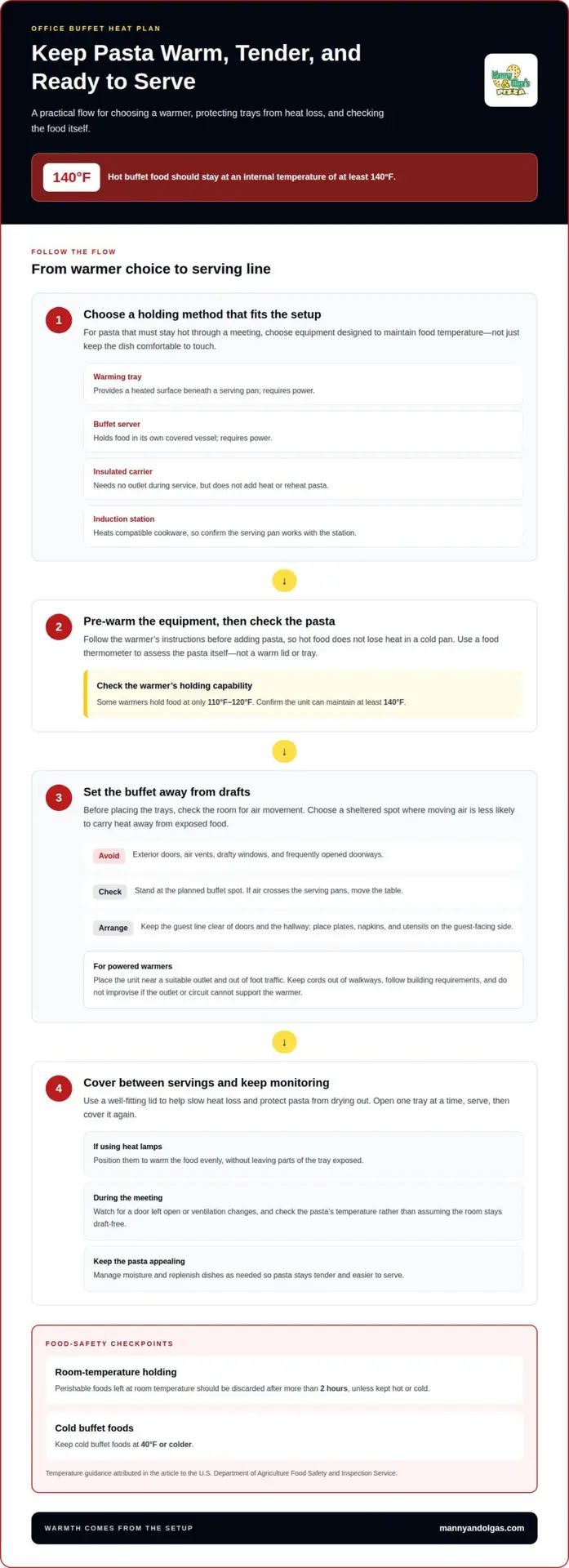
Chafing dishes aren’t the only way to keep an office pasta buffet warm. Keeping pasta trays warm in office conference rooms without chafing dishes means combining a suitable food warmer with a few smart placement and covering choices. Hot buffet food should stay at an internal temperature of at least 140 °F.
It’s easy to see why this can feel tricky: pasta cools while people meet, mingle, and serve themselves, and a drafty room can work against your setup. The goal is to keep the food warm without drying it out or making the buffet harder to manage.
Here, you’ll learn four practical ways to hold the heat: use a food warmer, keep trays away from drafts and air vents, cover insulated trays between servings, and use heat lamps. Each approach can help you plan a more comfortable conference-room buffet, with pasta ready to serve when the team is hungry.
Key Takeaways
- Preheat a suitable food warmer before adding pasta, and choose equipment designed to maintain heat during serving.
- Set the buffet away from doors, vents, and drafty windows to reduce heat loss.
- Cover insulated trays between servings to help hold warmth and protect the pasta from drying out.
- Position heat lamps to warm the food evenly without leaving parts of the tray exposed.
- Keep pasta tender and easier to serve by managing moisture and replenishing dishes as needed.
1. Using warming trays and other food warmers
Electric warming trays, buffet servers, and insulated carriers suit different conference-room setups. A warming tray provides a heated surface beneath a serving pan, while a buffet server holds food in its own covered vessel. An insulated carrier needs no outlet during service, but it doesn’t add heat. For pasta that must stay hot through a meeting, choose equipment designed to maintain the food’s temperature, rather than equipment that merely keeps the dish comfortable to touch.
Pre-warm the serving equipment before adding pasta, following its manufacturer’s instructions. This helps prevent the hot food from losing heat as soon as it enters a cold pan. Some warmers hold food at only 110 °F to 120 °F, so check whether the unit can maintain at least 140 °F. Use a food thermometer to assess the pasta itself, rather than relying on a warm lid or tray.
Induction warming stations heat compatible cookware, so the pan matters as much as the base. Confirm that the serving vessel works with the station, then place the setup near a suitable outlet and away from foot traffic. Keep the cord out of walkways. Office rules for portable warmers and extension cords vary by building, so follow the facilities team’s requirements before plugging in equipment.
Power needs depend on the warmer’s label and the room’s outlet setup. Place the unit close enough to an outlet to avoid stretching the cord, and keep the serving area clear for guests. If the outlet or circuit cannot support the warmer, use a non-electric insulated carrier for transport and arrange another safe serving plan instead of improvising with unsuitable connections.
Costs differ by equipment type, capacity, and whether the unit actively heats food. Electric warming trays and buffet servers require power; insulated carriers avoid powered holding during service but don’t reheat pasta. Compare the intended use and setup needs rather than assuming one option is always cheaper.
For sustained heat, a chafing dish warms its serving pan using heat transferred from a shallow water pan below. Built-in burners or gel fuel canisters heat the water; two-hour canisters are common, and four-hour options may be available. Warm the water in the lower pan before setting the food pan above it. Without a chafing dish, a properly rated electric warmer is the practical alternative.
Warming plates in an oven can help keep plated servings comfortable, but it won’t maintain a buffet pan’s temperature. The warm-plate method uses an oven at 300-350 degrees F for 2-3 minutes. Keep hot dishes covered between servings, and monitor the pasta’s temperature. According to the U.S. Department of Agriculture Food Safety and Inspection Service, perishable foods left at room temperature should be discarded after more than 2 hours unless kept hot or cold. Cold buffet foods should be kept at 40 °F or colder, according to the same agency.
Costs vary with equipment type, capacity, and whether it actively heats food. Warming trays and buffet servers require power, while insulated carriers avoid powered holding during service but don’t reheat pasta.
2. Avoiding drafts and air vents
Choose the buffet location before setting down pasta trays. Keep the table away from exterior doors, air vents, and drafty windows, where moving air can carry heat away from exposed food. A table beside the conference-room door may seem convenient, but repeated openings can create a steady draft across the serving area.
Walk the room and notice where air flows before arranging the food. Check vents near the ceiling and floor, windows, door gaps, and the path between the conference room and hallway. If you feel air moving across the planned buffet spot, shift the table to a more sheltered wall. A drafty room on a crisp morning could cool a platter below a safe serving temperature sooner than expected.
Keep the serving line out of the airflow, not just the pasta. Place plates, napkins, and utensils on the guest-facing side, with trays farther from the door or vent. This layout helps keep guests from blocking the food’s most sheltered area. It also reduces traffic around hot dishes as people enter or leave.
Use a simple room check before serving:
- Locate exterior doors, air vents, and drafty windows.
- Stand at the buffet position and notice direct airflow.
- Move the table if air crosses the serving pans.
- Keep the guest line clear of doors and the main hallway.
During the meeting, watch for changes in room conditions. A door propped open for deliveries or a switched-on ventilation system can expose trays to a new stream of cool air. If guests gather near the entrance, reposition the serving line so people can reach plates without leaving pasta beside the open door.
Pair a sheltered location with covered trays between servings. A lid helps limit heat loss, while a position away from drafts reduces the air movement that can cool exposed pasta. Open one tray at a time, serve guests, then cover it again. During a long conference session, check the food’s temperature rather than assuming a quiet room stays draft-free.
Room layout matters even when a warming unit is available. Avoid placing the warmer under an air-conditioning outlet or beside a frequently opened door. Leave enough space for the lid to open fully and for guests to serve themselves without bumping the table. A stable, sheltered buffet makes serving easier and helps the pasta stay appealing throughout the meeting.
3. Combining insulated trays with lids
An insulated tray and a well-fitting lid work together to slow heat loss. The tray helps shield pasta from cooler room air, while the lid reduces heat escaping from the surface. Keeping food covered also limits heat loss through moving air. This method suits a conference buffet where guests serve themselves over time, especially when each tray stays closed between visits.
Start with a clean, dry tray and its matching lid. If the container is designed for pre-warming, follow its instructions before adding pasta. Transfer the food while it’s hot, then close the lid promptly. A loose cover leaves gaps where warm air can escape, so seat the lid evenly around the rim. Don’t force a lid that doesn’t fit.
For keeping pasta trays warm in office conference rooms without chafing dishes, use separate covered trays for different pasta options. For example, keep marinara pasta in one tray and a creamy pasta dish in another. Guests can open the dish they want without exposing every serving pan. Smaller portions also make it easier to replace a tray as it empties, while the remaining food stays covered.
Make the serving sequence simple. Set out utensils and plates before opening a lid, then uncover only the tray being served. Close it again when guests finish. This limits how long each dish sits exposed. If people return for seconds, repeat the routine instead of leaving every lid off across the buffet.
Keep each lid clean and accessible during service. Place it on a clean, stable surface while guests serve themselves, then replace it without touching the inside. If condensation collects underneath, lift the lid carefully and keep moisture from dripping onto nearby plates or the table. A separate rest for each lid prevents crowding beside the trays.
Insulation and lids help retain warmth, but they don’t reheat food. Keeping pasta trays warm in office conference rooms without chafing dishes works best when the food is already hot and a suitable heat source supports the setup. Use a food thermometer to monitor the pasta. Its starting temperature, room conditions, and how often the lid is opened all affect how well the setup holds heat.
Before guests arrive, arrange trays so lids can open without hitting a wall, chair, or serving utensil. Keep spare lids nearby and label each dish clearly. For example, a “tomato sauce” label helps guests choose quickly and close the correct tray. This small setup step reduces unnecessary lid handling and keeps the pasta ready for the next serving.
4. Heat lamps and infrared warmers
Heat lamps and infrared warmers direct radiant heat toward exposed food, making them useful when trays need an open serving area. They work best as part of a setup, not as a replacement for checking the pasta’s temperature. A lamp above an uncovered tray can warm its surface, but the middle and edges may not heat evenly.
Position the lamp over the center of the serving pan, following the equipment’s instructions. Keep the beam focused on the food rather than the table, plates, or guest area. If the lamp sits too far to one side, pasta near the opposite edge receives less direct heat. For a long tray, adjust the position or use equipment designed to cover the full serving area.
Before guests arrive, test the setup with the actual pan. Switch on the warmer, place the pasta beneath it, then measure different areas with a food thermometer. Check the center and edges, since the surface can feel warm while cooler spots remain underneath. If readings vary, reposition the lamp or divide the pasta between smaller pans for more even exposure.
Infrared warmers can work well when an office buffet needs an open display. They don’t depend on a water pan like a chafing dish, but heat still needs a clear path to the food. A lid, tall garnish, or serving utensil beneath the lamp can block that path. Keep the area above each tray clear and place serving tools beside it.
Use a lid between serving periods. Guests can lift it to serve, then replace it while the food waits. This combines direct warming with a barrier against heat loss, rather than leaving pasta exposed throughout the meeting. Keep the lid on a clean, nearby surface, away from plates and busy walkways.
Plan the electrical setup before placing a lamp on the buffet. Put the warmer on a stable surface, route its cord away from guest traffic, and keep the unit clear of paper decorations and other items. Follow the equipment’s instructions and the office’s rules for powered appliances. If the table is narrow, choose a position where the lamp won’t interfere with serving or block access to the food.
Infrared warmth can dry exposed pasta if the same surface stays under direct heat too long. Stir gently when appropriate, rotate the serving pan if the warmer’s design allows it, and replenish with a fresh pan rather than piling more pasta on top. For example, keep a covered backup pan ready and replace the display dish as it empties. This keeps service moving and helps each portion warm evenly.
5. How to prevent pasta from drying out or sticking while keeping it warm
Pasta needs moisture and careful serving to stay tender in a warm tray. Keep the sauce with the pasta when the recipe suits it, and stir gently before serving. Sauced baked pasta, for example, is less exposed than plain noodles spread across a shallow, uncovered pan. Use a serving spoon that reaches the corners, so guests can lift portions without compressing the pasta.
For a slow cooker, a little olive oil can help prevent cooked pasta from sticking together. Add it sparingly, then toss the pasta gently so the strands get a light coating. Too much oil can leave a slick surface and make sauce cling less evenly. This approach suits pasta held in a slow cooker, not every warming tray or serving dish.
Another method is to keep cooked pasta and sauce separate until serving. Hold the sauce in a separate bain-marie or slow cooker, then combine small portions as guests serve themselves. This avoids leaving every noodle submerged in sauce throughout the meeting. It also lets guests choose how much sauce they want, while the main pasta tray stays easier to portion.
Keep the lid on between servings, opening the tray only when someone needs food. Each time a pan sits open, its surface loses moisture more quickly. A clean serving spoon beside the dish makes serving easier. Avoid leaving the spoon buried in the pasta, where it can obstruct the lid and encourage guests to leave the tray uncovered.
Refill serving dishes as needed instead of relying on one large pan for the whole event. Warm a smaller replacement pan, then swap it in when the display dish runs low. This keeps the pasta from sitting in a shallow layer under direct heat after most portions are gone. For a buffet with several sauces, refill each dish separately to preserve distinct textures.
Stirring can redistribute sauce and moisture, but frequent mixing may break delicate pasta. Use a broad spoon and lift from the bottom rather than scraping vigorously. If the sauce looks thick, add a little warm sauce and fold it through. Avoid adding cold liquid to a hot serving pan, as it can cool the food and change its texture.
Match the holding method to the pasta. Long noodles need gentle lifting, while baked pasta portions are easier to serve with a flat spoon. Keep backup portions covered until they’re needed, and replenish the display dish in stages. For a convenient meal before or after the meeting, explore the menu options.
Manny & Olga’s Pizza
Manny & Olga’s Pizza gives office organizers another easy option for a satisfying conference meal. If pasta is already on the menu, familiar pizza choices can add variety without changing your warming setup. Choose Cheese Pizza, Pepperoni Pizza, Manny’s Special Pizza, or Meat Lovers Pizza to round out the spread.
Keep the pasta covered and use a warming method that suits your conference room. Add pizza when you want another shareable option. For a meeting menu that pairs saucy pasta with hot, savory slices, contact Manny & Olga’s Pizza.
Make the meal plan part of the meeting plan
A smooth conference meal starts before the first tray reaches the table. Consider how guests will move through the room, where they’ll set their plates, and how serving fits around the meeting agenda. A little planning helps food service feel like part of the gathering, not an interruption.
For keeping pasta trays warm in office conference rooms without chafing dishes, match your warming approach to the room and the way people will serve themselves. Assign someone to keep the buffet orderly and the food covered between servings. With that coordination in place, you can focus on the conversation instead of rearranging the table mid-meeting.
If you’re planning food for an office gathering, contact Manny & Olga’s Pizza to discuss your catering needs. Bring your menu ideas and meeting plans, then make the meal your own. A little preparation can make the room feel welcoming and the gathering more enjoyable.
Frequently Asked Questions
How do you keep pasta trays warm without chafing dishes?
Use an electric warming tray or buffet server that can maintain the pasta’s temperature, and place it on a stable surface near an appropriate outlet. If the conference room has no suitable outlet, an insulated carrier can help during transport, but it won’t reheat food. Keep a food thermometer handy, and plan how to move the pasta from transport to serving without leaving it unattended.
What are the best electric food warmers for catering pasta in an office?
Choose a warmer sized for your serving pan and able to maintain food at a safe temperature. Compare warming trays, covered buffet servers, and induction stations by the cookware they accept, their power needs, and how easily guests can serve themselves. An induction station, for example, works only with compatible cookware. Choose based on the office setup and the amount of pasta, not a model name alone.
Can insulated food carriers keep pasta warm, and for how long?
Insulated carriers help retain heat during transport, but they don’t actively warm pasta. How long the food stays hot depends on its temperature when packed, the carrier’s insulation, how often it’s opened, and the surrounding conditions. Use the carrier to move covered trays, then transfer them to suitable holding equipment for service. A thermometer can show whether the pasta remains hot enough, rather than relying on touch or steam.
Can slow cookers or warming trays safely hold pasta for a conference lunch?
Yes, if the equipment keeps the pasta at a safe holding temperature throughout service. The U.S. Department of Agriculture Food Safety and Inspection Service recommends keeping hot buffet food at 140 °F or above. A slow cooker’s warm setting or a warming tray may not achieve that level, so measure the food itself. Stir gently before checking, since temperature can vary between the center and edges of the dish.


