
The best office lunch isn’t always the easiest to distribute. When everyone eats together, shareable pasta platters can make lunch feel relaxed and communal. When schedules are tight or guests arrive at different times, individual lunch boxes are easier to hand out. That’s the key difference between pasta catering platters vs individual lunch boxes.
It’s natural to weigh convenience first. But the meeting’s purpose matters too: a quick working lunch has different needs from a longer gathering where colleagues can pause, share food, and connect. A 30-minute lunch window often favors boxed meals, while a shared spread can suit a more leisurely break.
This guide compares how each format fits meeting schedules, event goals, serving logistics, and menu variety. When planning, consider guest arrival times, appetites, and the setup the meal requires. Use these differences to choose a lunch that satisfies your group and runs smoothly, without making food another item on the meeting agenda.
Key Takeaways
- Use boxed meals when guests arrive at different times; individual portions make handout and per-person planning easier.
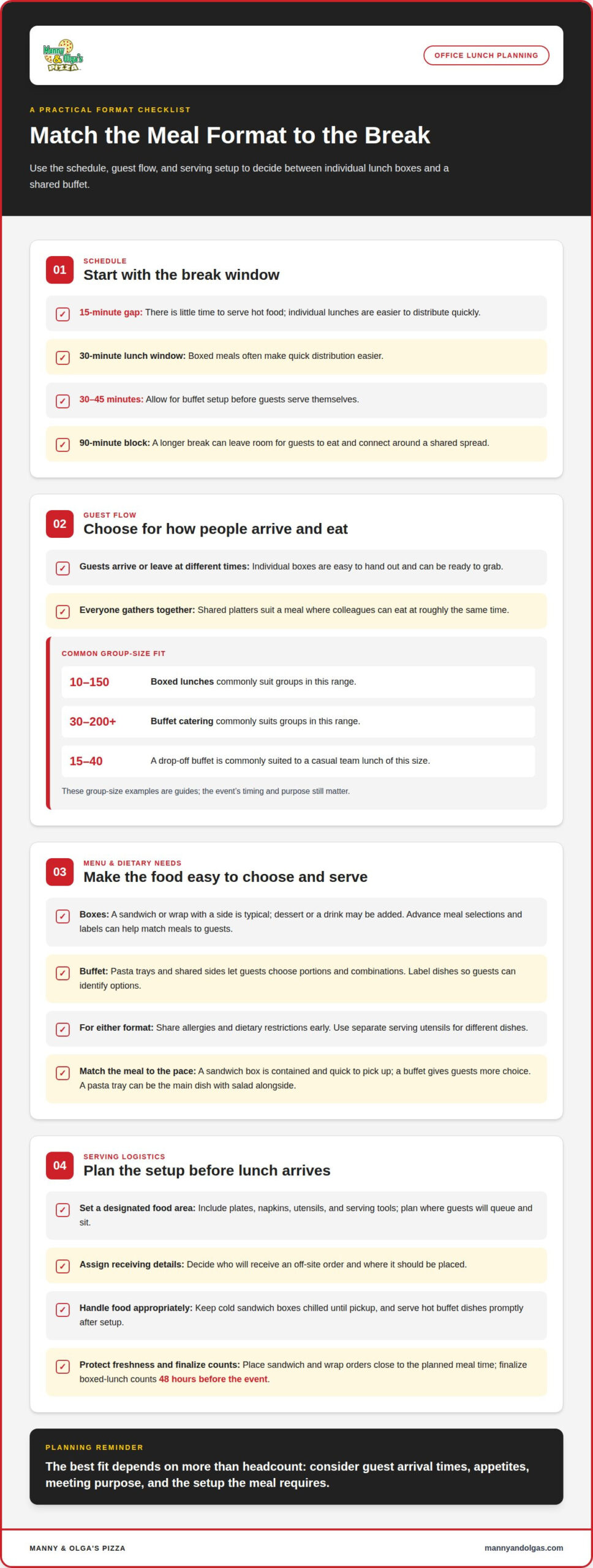
- Allow time for the serving setup: a buffet usually needs 30-45 minutes, while a 90-minute break can leave room for guests to eat and connect.
- Plan platter portions around how many people will eat, their appetites, and whether lunch is a full meal or a light refreshment.
- Build logistics into the order, including plates, napkins, utensils, serving tools, a food drop-off point, and someone to receive it.
- Consider shareable pasta trays for a familiar, communal meal, and individual boxes when advance meal selection and clear dietary labels are priorities.
How boxed lunches and buffet catering work
Boxed lunches arrive as individual meals, while buffet catering sets food out for guests to serve themselves. A 30-minute lunch window often favors boxes for quick distribution; buffet service usually needs 30-45 minutes of setup.
Menu Options for Boxes and Buffets
A boxed lunch typically includes a sandwich or wrap and a side, with dessert or a drink sometimes added. Individually wrapped sandwiches are generally ordered one per person. A buffet can include pasta trays and shared sides, giving guests options at the serving table.
Plan clearly for dietary needs with either format. Advance selections and labels can help match boxed meals to guests, while labeled buffet dishes help people identify options. Share allergies and restrictions early, and use separate serving utensils for different dishes. For example, labeling a salad and a pasta dish makes the spread easier to navigate.
Choose the menu to suit the meeting’s appetite and schedule. A sandwich box is a contained meal for someone returning quickly to work; a buffet lets guests choose portions and combinations. A sandwich platter can be paired with salads, soup, chips, fruit, cookies, or beverages. For a shared meal, a pasta tray can be the main dish, with salad alongside it.
Pricing for Platters and Lunch Boxes
There isn’t a dependable average per-person cost for pasta platters or individual lunch boxes. Prices depend on guest count, portions, menu choices, packaging, and delivery or setup needs. Boxes make the per-person total easier to calculate because each meal is counted individually; platter totals depend on portions and sharing.
Compare orders with the same guest count and meal scope. A pasta meal with sides differs from a sandwich box, so consider what each order includes. Minimum order requirements vary by caterer and format. When arranging catering, choose an order size that fits your gathering.
Boxed lunches commonly suit groups of 10-150 guests, while buffet catering commonly suits groups of 30-200 or more. Boxes can remain ready to grab when guests arrive or leave at different times. Sandwich and wrap orders are best placed close to the planned meal time to help preserve freshness; finalize boxed-lunch counts 48 hours before the event.
Plan food temperature and serving logistics for either format. Keep cold sandwich boxes chilled until guests collect them, and serve hot buffet dishes promptly after setup. Set aside a designated food area with plates, napkins, utensils, and serving tools. For off-site catering, decide who will receive the order and where it should be placed.
How caterers match pasta platters or boxed lunches to an event’s purpose and schedule
The right format follows the meeting’s purpose, guest timing, and appetite. For a 20-person lunch, a caterer might recommend shared platters if everyone gathers together, or individual meals if attendees need to eat at different times. The headcount matters, but so does whether lunch is a quick pause or part of the event itself.
Consider how people will use the meal. Sandwich platters suit gatherings where guests eat in the same place at roughly the same time. A lighter spread can fit a midday working meeting, while heartier sandwiches and an extra side may suit an afternoon event or longer gathering. For a casual team lunch, a drop-off buffet is commonly suited to 15-40 people.
Group size can help frame the decision. A small internal lunch for 10-20 people may work well with a simple shared spread, especially when conversation is part of the plan. Department meetings for 30-60 people need clear serving flow, while corporate events for 100 or more guests make portion planning and food placement especially important. These examples guide the format; they don’t replace the event’s schedule and purpose.
Drop-off, styled setup, and staffed service involve different levels of coordination. For a drop-off, plan who receives the order and where it will be set down. A styled setup also needs a defined serving area and space for plates and utensils. Staffed service may require coordination around the agenda and room access, so share timing and layout details when arranging catering.
Bread choices can shape how familiar lunch feels to a team. For a group accustomed to standard deli sandwiches, a chewy baguette may be less comfortable than familiar, softer sandwich bread. Consider that preference and the meeting’s pace when narrowing sandwich choices. Wraps offer another easy-to-hold option.
Side dishes can round out the meal without slowing the schedule. Salads can lighten a lunch spread, while dessert may suit a longer team gathering. Choose menu items based on whether guests will eat at once, circulate through the room, or return to the agenda quickly. Share the event purpose, serving time, guest count, and preferred meal style when planning.
For a meeting built around shared food, explore catering options as you decide which format fits the room and schedule.
Comparing catering formats by break length and logistics
A 15-minute gap between sessions leaves little time for serving hot food. Individual lunches are easier to distribute quickly, while a 90-minute block can accommodate a buffet where guests eat and connect.
Let the break schedule shape the order. For a short office lunch, arrange meals for quick pickup and keep the serving area clear. For a longer gathering, a pasta platter can become part of the social time. Either way, plan where guests will queue, sit, and return dishes or packaging.
Book with the format and event schedule in mind. Finalize boxed-lunch counts 48 hours before the event, and confirm buffet headcounts 72 hours beforehand. A full buffet with staffing and equipment needs additional coordination for food preparation, setup, and room access, so plan ahead with the event timeline in hand.
Office building access can affect when food is ready to serve. Share the building address, floor, reception or loading instructions, and the name of someone who can receive the order. If security requires visitor registration or an elevator reservation, include those steps in the arrival plan. A clearly identified serving table helps keep boxes and platters from blocking a hallway.
Off-site events need a clear handoff, even without office reception. Identify who will meet the delivery, where the order should be set down, and when the room will be ready. Include plates, napkins, utensils, serving utensils, and a designated food area in the setup plan. For a buffet, allow 30-45 minutes for setup before service.
Cancellation, change, and delivery policies vary according to order timing and the arrangements involved. They typically explain deadlines for changing guest counts, how cancellations are handled, and the delivery window and drop-off location. Making decisions early allows more time to coordinate food preparation and logistics; late changes can affect the menu or setup plan.
Include dietary details in the order plan. Share allergy information and gluten-related restrictions early, and use clear labels so guests can identify suitable dishes. For a mixed group, individual boxes can keep selections separate, while a buffet calls for labeled dishes and separate serving utensils. That distinction helps guests choose confidently without slowing the line.
Sharing platters for social lunches and menu variety
A shared spread turns individual meal pickup into a chance to eat together. Italian pasta trays suit corporate settings because they’re familiar and easy to share. Sandwich platters add variety, with sandwiches and wraps served pre-cut in half so guests can sample different fillings. This format works best when colleagues gather in one place and eat at roughly the same time.
Start planning the menu with three decisions: how many guests will eat, how hungry they’re likely to be, and whether lunch is a full meal or light refreshment. A lighter selection may suit a working lunch; a longer gathering may call for heartier portions and an extra side. These choices help determine how many platters and sides to order.
Variety doesn’t mean ordering every option. Build a balanced menu around one main format, then add a few complementary choices. A sandwich platter can pair with salads, soup, chips, fruit, cookies, or beverages. An Italian pasta tray can anchor the meal, with salad alongside it. A mix of textures and flavors gives guests options without overcrowding the buffet.
Guest preferences determine which variety is useful. Ask about dietary requests early, then identify dishes clearly so guests can recognize suitable choices. Labels can distinguish a salad from a pasta dish and note dietary information provided with the order. Salad ingredients and dressings can vary, so clear item descriptions help vegetarian and vegan guests make informed choices.
Shared platters also affect how guests serve themselves. Put serving utensils with each dish, keep labels visible, and arrange popular items where guests can reach them easily. If attendees arrive in waves, individually packed meals may be more convenient. If the group sits down together, shared portions can encourage conversation and make lunch feel less like a quick handout.
For a social lunch, choose foods guests can comfortably share and serve. A platter of half sandwiches lets people try different fillings; pasta trays create a hearty central dish. Match portions to appetites rather than assuming every platter serves a fixed number. The right mix suits the meeting’s purpose, gives guests meaningful choices, and keeps the serving area easy to navigate.
Italian pasta trays and shareable catering
Italian pasta trays bring a familiar, substantial main dish to a corporate lunch. Their strength is the shared format: guests gather at the buffet, serve themselves, and return to conversation. That makes a pasta tray a natural fit when the meal should feel like part of the gathering rather than a quick handout. Individual boxes work differently, keeping each guest’s meal separate and ready to take.
Plan portions around three details: how many guests will eat, their appetites, and whether lunch is the main meal or light refreshment. A tray-centered lunch for hungry guests calls for a different amount than a brief meeting with a lighter spread. Use those details to estimate the order and decide whether the meal needs another dish. Don’t choose portions based on headcount alone.
A buffet also changes the pace of lunch. Guests can serve themselves when they’re ready, which suits a gathering where people have time to mingle. Place the pasta tray within easy reach, with serving utensils nearby and room for a short line. Keep the route between the food and seating clear, so guests aren’t balancing plates in a crowded doorway.
Variety can come from the balance of the spread, not a long menu. A pasta tray can be the centerpiece, while a complementary option gives guests another choice. For vegetarian guests, include a clearly identified dish that fits their needs. Share dietary requests in advance so the menu and labels can account for them. Don’t assume every guest can eat the same dish.
Compare a pasta buffet with boxed lunches by considering how guests will eat. If everyone sits down together, a shared tray can support conversation and a communal meal. If people leave at different times, individual boxes are easier to distribute without interrupting the meeting. For a mixed schedule, decide whether one format suits everyone or separate meal arrangements make more sense.
Before placing an order, share the guest count, meal purpose, expected appetite, dietary requests, and serving time. These details help shape portions and the buffet plan. A clear plan also shows whether the pasta tray is a full lunch or part of a larger spread. Keep the goal simple: enough food to satisfy guests, with a serving flow that fits the event.
Plan a shareable office meal around your meeting’s schedule and guest preferences.
Manny & Olga’s Pizza: Party Platters
Manny & Olga’s Pizza offers Party Platters and Catering for office gatherings where guests can share a meal. For familiar, shareable choices, Cheese Pizza and Pepperoni Pizza can make a satisfying centerpiece. Choose a platter format when attendees will eat together and serve themselves; individual lunch boxes suit meetings that need separate, ready-to-grab meals.
Think about the event’s schedule, how guests will gather, and whether a shared spread fits the room. Those details help shape a catering choice that feels easy to serve and right for the occasion. For an office meal centered on pizza and party platters, contact Manny & Olga’s Pizza.
Make Your Next Office Meal Easy to Plan
Let the meal reinforce the kind of gathering you want: focused, relaxed, or social. The choice between pasta catering platters and individual lunch boxes can shape how colleagues pause, eat, and reconnect. Start by deciding what you want lunch to feel like.
Bring the practical details together in one plan: the event’s purpose, the serving format, and a menu your group will enjoy. For a pizza-centered option, Manny & Olga’s Pizza offers Cheese Pizza, Pepperoni Pizza, and Manny’s Special Pizza. Choose what suits your meeting and make the next step simple.
Contact Manny & Olga’s Pizza to discuss catering for your office gathering. A thoughtful meal can help make the meeting feel welcoming from the first slice.
Manny & Olga’s Pizza for Catering Platters or Individual Lunches
Manny & Olga’s Pizza offers catering, Party Platters, pizza, subs, salads, and other meal options. After deciding whether your gathering calls for shared platters or individually selected meals, choose menu options that fit your plan.
For a group meal, consider pizza, Buffalo Wings, Garden Salad, Greek Salad, or pasta dishes such as Baked Ziti with Beef and Stuffed Shells. For individual lunches, options include subs, wraps, burgers, and pizza.
Frequently Asked Questions
What is the best lunch catering option for an office meeting?
The best format is the one that fits how attendees will use the meeting time. Choose individual meals if guests need separate portions or have different food preferences. Choose a shared spread if eating together supports the event’s purpose. A working session with a strict agenda may benefit from meals that are easy to distribute, while a team celebration can make a shared table part of the experience.
Are lunch boxes better than sharing platters?
Lunch boxes work better when each person needs a separate meal; shared platters work better when guests will eat together. Boxes make it easier to match a meal to a named attendee, while platters let guests choose from shared dishes. Consider the room too: a conference table with limited serving space may favor boxes, while a lounge with a central food table can suit platters.
What do pasta catering platters and individual lunch boxes typically include?
A boxed lunch typically includes a sandwich or wrap and a side, with dessert or a drink sometimes added. A pasta platter provides a shared main dish, which organizers may pair with a salad or other sides. A pasta tray with salad creates a different meal from a sandwich box with a side. Menu details depend on the order and event needs.
What are typical minimum order sizes for pasta platters and boxed lunches?
Philadelphia boxed-lunch orders commonly have a minimum of 10 boxes, while some caterers require 15-20. Platter orders are planned around the number of people eating, how hungry they are, and whether the food is a full meal or light refreshment. For instance, a platter intended as the main lunch needs a different portion estimate than one served alongside other dishes.
How many people does a pasta catering platter serve?
A platter’s serving count depends on portion size and its role in the meal, not a universal guest total. A main course for hungry attendees calls for more food per person than light refreshments alongside other dishes. Give the caterer the expected headcount and menu context, including any sides, so the portion estimate reflects what guests will eat.
Which option is better for office meetings, events, or outdoor gatherings?
For a formal office meeting, individual meals can keep each place setting orderly. For a social event, shared platters invite guests to gather around the food. Outdoor gatherings need careful planning for the serving location, guest flow, and protection of the food. Choose the format based on whether attendees will sit together, move around, or eat at different times.
What delivery, setup, and serving supplies are included with catering platters versus lunch boxes?
In either format, plan for the food handoff and the supplies needed to serve it. A catering setup should account for plates, napkins, utensils, serving utensils, and a designated food area. Individual boxes simplify portion handout, while platters need serving tools and table space. For an off-site gathering, also plan who will receive the order and where it should be placed.


