
The easiest lunch to order isn’t always the easiest to serve. For sub party platters vs boxed lunches for corporate events, the best fit depends on how guests will eat: platters suit a group gathering around the food at the same time, while boxed lunches make individual meals easier to distribute when schedules vary.
For corporate events, sub party platters work well when guests can share a meal, while boxed lunches suit individual schedules and meals on the go. The key differences are how food is portioned, served, and cleared away.
Compare serving style, packaging, cleanup, and the event schedule before choosing. Manny & Olga’s Pizza offers catering, including Party Platters, pizzas, subs, salads, and other dishes, for gatherings in Washington, D.C., Bethesda, Wheaton, and nearby service areas. Use this guide to match the setup to your event.
Key Takeaways
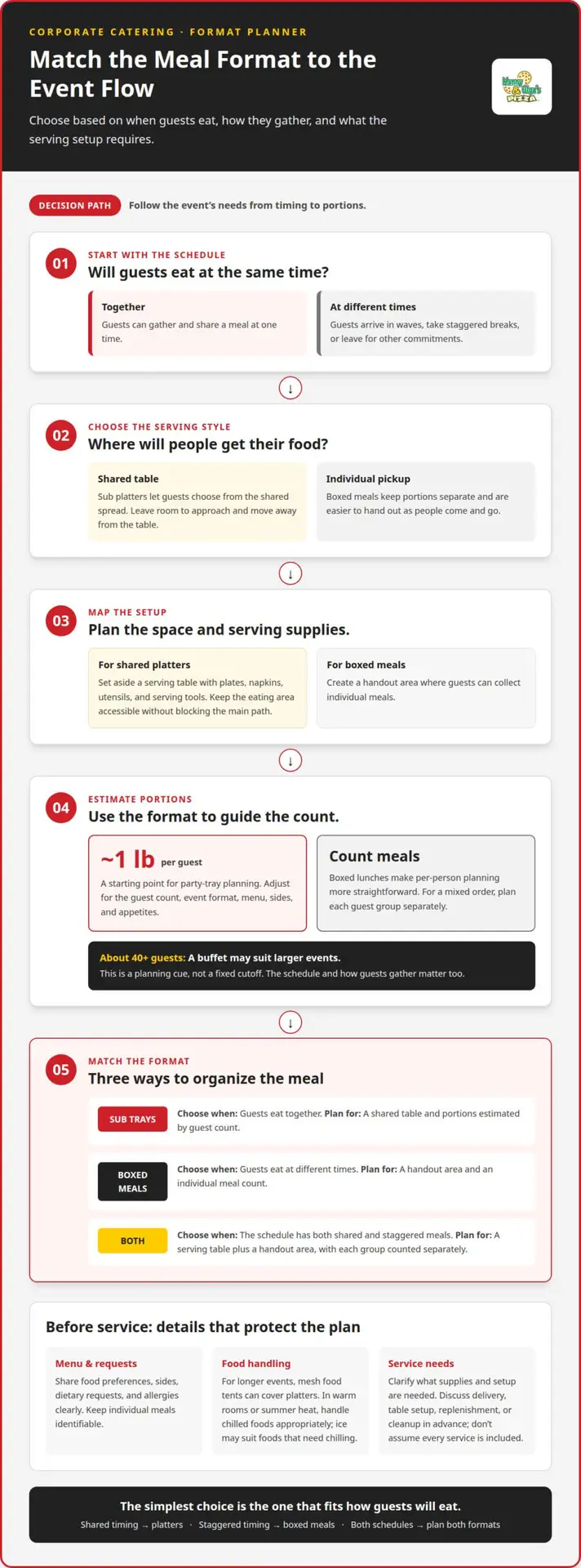
- Choose platters when guests can gather and eat together; boxed meals work well when people arrive or take breaks at different times.
- Estimate platter portions around your guest count and event format, while boxed meals make per-person planning more straightforward.
- Plan serving space, plates, napkins, utensils, and serving tools when ordering shared food.
- Consider how packaging affects distribution and cleanup, especially when guests will eat away from a shared table.
- Match sandwich variety and presentation to the event: shared platters encourage guests to choose, while individual meals keep portions separate.
Can I order both trays and boxed meals?
Yes. A corporate event can use shared platters for one part of the schedule and individual meals for another. For example, serve platters during a team welcome, then hand out separately ordered meals to employees leaving for off-site meetings. Match each format to when and where guests will eat.
Timing matters for sandwich quality. Coordinate the catering order with the event schedule so food is ready when guests are set to eat. If guests arrive in waves, individual meals are easier to distribute as people come and go. Platters fit better when attendees can gather around the serving table together.
Give shared food a clear place to land. Set aside a serving table with room for platters, plates, napkins, utensils, and serving utensils. Keep the eating area accessible, but leave space for guests to approach and move away without blocking the room’s main path. Boxed meals need a separate handout area if guests collect them individually.
For a mixed order, plan the two formats as separate parts of one meal. You might set out shared sub trays for guests eating together and reserve boxed meals for people with different schedules. Add one or two sides, such as salad, chips, fruit, or cookies, to round out the catering order.
Portion planning should reflect the guest count and meal format. For party trays, a planning guideline is about 1 lb of food per guest. That is a starting point for estimating the spread, not a substitute for considering the event’s timing, menu, and guests’ appetites. Boxed meals, by contrast, make it easier to calculate a per-person total.
Dietary requests also affect how a combined order works. Gather guests’ requests early and clearly communicate allergies or restrictions when placing the order. Keep individual meals identifiable, and make shared items easy to see. Clear organization helps avoid confusion when the room gets busy.
For longer events, protect the quality of food that sits out. Mesh food tents can cover platters, while ice may suit foods that need chilling. In summer heat or warm rooms, chilled items such as dairy-based spreads and fresh produce need proper handling to preserve quality and food safety.
| Option | Meal timing | Serving setup | Portion planning |
|---|---|---|---|
| Sub trays | Guests eat together | Shared table, plates, utensils | Estimate by guest count |
| Boxed meals | Guests eat at different times | Handout area | Count individual meals |
| Both formats | Schedule has shared and staggered meals | Table plus handout area | Plan each group separately |
Choose both formats when your event has distinct eating times or guest groups. Otherwise, match one format to how attendees will gather and eat.
Party tray catering costs and serving sizes
The cost of a catering order depends on the guest count, food selection, portions, sides, and service format. Share those details when requesting a quote so the order can be planned around your event, rather than relying on an estimate that may not fit.
Start with the meal itself. For party trays, plan about 1 lb of food per guest as a starting point. Then consider whether trays are the full meal or part of a spread with sides. A working lunch for a ten-person team calls for a different plan than a client appreciation event for fifty guests. The time of day, setting, and expected appetite also affect portions.
Guest count can guide the format. A buffet setup may suit events with more than about 40 guests, while a smaller working lunch may be simpler with individual meals. These are planning cues, not fixed cutoffs. The event’s schedule and whether guests gather at one time matter as much as headcount.
Give Manny & Olga’s Pizza a clear picture of your event: guest count, meal time, venue, food preferences, and dietary requests. Explain whether guests will eat together or arrive in waves. Ask what serving supplies and setup you need to arrange. For a buffet, discuss in advance whether you need delivery, table setup, food replenishment, or cleanup. Don’t assume every service is included in the catering order.
Shared sub platters need careful handling during service. Keep chilled foods, including dairy-based spreads and fresh produce, properly handled in warm rooms or summer heat. For longer events, mesh food tents can cover platters, and ice may help where appropriate. Place serving utensils with the trays and keep the table accessible, so guests can serve themselves without crowding.
Vegetarian, vegan, gluten-free, and allergy-sensitive guests need clear planning. Collect dietary requests early and communicate allergies or restrictions clearly to the caterer. A gluten-free pizza can be one meal option, but it doesn’t automatically meet every guest’s dietary needs or address allergy concerns.
For a useful estimate, separate food quantities from service needs. List the expected guests, meal format, menu choices, and sides, then plan the setup requirements. A clear catering plan makes it easier to match portions and logistics to the event.
For event planning, explore catering options that fit your menu and serving needs.
Boxed Lunches or Sandwich Platters: Which Fits?
Choose a sandwich platter when guests can gather around a shared spread and select what appeals to them. This format suits office celebrations, networking breaks, and social gatherings where people mingle. Individually packaged meals fit better when each person needs a separate meal, such as during a conference with different sessions or staggered breaks.
A platter’s appeal is choice at the table. An assortment of sandwich types or fillings lets guests choose portions according to appetite and preference. Arrange the sandwiches so each option is easy to spot and reach, rather than stacking everything in one pile. A labeled layout helps people identify their selection without interrupting the flow of the gathering.
What does a boxed lunch include? It typically contains a sandwich or wrap, a side, and sometimes a dessert or drink. The exact mix depends on the order. For dietary accommodations, collect requests in advance, share allergies and restrictions clearly with the caterer, and use labels to distinguish meals. Advance selections and clear labels can make dietary planning easier for the event organizer.
Think about how guests will move through the room. At a reception where people stand and chat, smaller sandwich portions can be easier to manage than a full meal. A seated meeting gives guests more room to open and eat an individual meal. If the agenda includes separate sessions, packaged meals can also be distributed without gathering everyone at one table.
Presentation matters for shared food. A platter creates a central point for the meal and makes the selection visible to the group. Keep the layout simple: place similar sandwiches together, leave room for serving utensils, and position plates and napkins within reach. For a business social, this setup can make it easy for guests to choose while keeping the serving area organized.
Boxed lunches offer a different kind of clarity. Each meal stays together as one package, which can help organizers hand out meals by attendee or schedule. A box also suits a guest who needs to take lunch back to a desk or meeting room. The tradeoff is less shared choice at the table, since each person receives an individual selection.
For smaller appetites, consider a mix of full and half sandwiches if the order allows. This can give guests more flexibility than serving only full sandwiches. Match portions to the event’s meal timing and the role lunch plays in the day, whether it’s the main meal or a quick break between sessions.
Use the gathering itself as your guide: choose platters for visible variety and shared serving, or individually packaged lunches for separate meals and easier distribution.
Individual meal packaging and cleanup
Boxed lunches keep each sandwich or wrap with its accompanying items in one package. They often include a sandwich or wrap, a side, and sometimes dessert or a drink, depending on the order. This format can simplify distribution at meetings where attendees take breaks at different times and gives organizers a clear way to assign meals by person or schedule.
Packaging changes the handoff. For a meeting with staggered arrivals, meals can be arranged for pickup instead of requiring everyone to visit a shared serving table. Clear labels help guests identify their meals, especially when selections differ. Share the names or meal categories you want shown so the handout is organized.
Plan the pickup point before food arrives. A registration table, room entrance, or side counter may work, depending on the layout. Keep meal pickup separate from the check-in line, and leave room for guests to collect a meal without blocking the doorway. For a conference with several sessions, coordinate availability with the break schedule.
Cleanup also depends on how people eat. With individual packages, guests can gather their own packaging after lunch, while shared platters leave serving pieces and containers at a central table. Neither format removes the need to plan a cleanup point. Place waste and recycling containers where the venue provides suitable options, away from the food handout area.
For an office meeting, decide how leftovers will be handled before service begins. A labeled meal that remains untouched is easier to identify than an unmarked package among several meals. Keep remaining food together and follow the venue’s handling arrangements. For shared trays, note which items have been opened and keep used serving utensils separate from clean supplies.
Packaging can also affect how guests carry lunch back to their desks or meeting rooms. A boxed meal is practical when attendees need to move between rooms, but it requires individual packages rather than a shared table setup. Platters reduce separate handoffs, while asking guests to serve themselves in the designated eating area.
Before placing the order, align the meal count, labeling approach, pickup location, and cleanup plan. Explain whether guests will eat together or across separate meetings, and share any dietary selections that need clear identification. That planning connects the packaging to the event’s actual flow, rather than leaving meals in the wrong place.
Choosing platters versus boxed lunches for corporate events
Choose platters when guests eat together in one place, and boxed lunches when schedules or locations differ. That distinction matters more than whether the event is a meeting, training day, or celebration. Start with the agenda: identify when people eat, where they’ll sit, and whether everyone breaks at once.
For a company celebration with one shared meal, platters put sandwich choices in view and let guests select portions. They work best when attendees can approach the same serving area without interrupting speeches, presentations, or conversation. A room with a central table and a common break supports a relaxed, help-yourself flow.
Boxed lunches suit events with staggered breaks, off-site sessions, or attendees returning to separate work areas. Each meal stays together for distribution, so guests don’t need to gather around a buffet. This can make handoffs easier when people leave at different times or carry lunch to another room.
Serving and distribution depend on the room, too. A platter requires a shared surface and enough access for people to serve themselves. A boxed meal needs a pickup point that doesn’t block registration or a doorway. If attendees will move between rooms, individual packages are easier to carry than food taken from a central spread.
Dietary planning can also guide the decision. Boxed lunches can simplify meal identification when guests select in advance and packages are clearly labeled. Platters offer shared choice, but guests may need clear labels to distinguish sandwich options. In either format, communicate allergies and restrictions clearly so the catering plan reflects guests’ needs.
Consider how the meal fits the event’s purpose. A working session with limited downtime benefits from meals that are simple to hand out and carry. A networking reception or team celebration may benefit from visible variety, since shared platters let guests choose as they mingle. Neither format is automatically easier in every room; guest movement and timing determine the smoother setup.
Use this quick decision guide: select platters for one shared eating time, a common space, and a social meal. Choose boxed lunches for staggered schedules, separate destinations, or advance meal selections. If an event includes both a group gathering and later individual breaks, a combination can suit each part of the schedule.
Once you’ve matched the format to the event, explore catering options for your corporate gathering.
Manny & Olga’s Pizza: Party Platters
Manny & Olga’s Pizza offers Party Platters for corporate gatherings where guests can share a meal. They’re a natural fit for team lunches, office celebrations, and meetings where everyone eats together. Add familiar favorites such as Cheese Pizza, Pepperoni Pizza, or Manny’s Special Pizza for more variety at the table.
Choose this option when shared serving suits your event better than individual boxed meals. Consider when guests will eat, where food will be served, and what menu variety fits the group. Those details help shape a practical catering plan around the gathering.
For a shared meal at your next corporate event, contact Manny & Olga’s Pizza.
Make Your Next Corporate Meal Easy to Plan
Let the meal support the event’s purpose, not compete with it. Before placing an order, decide what you want guests to experience: a shared moment around familiar favorites or an individual meal that fits a busy agenda. Then match the menu and format to that vision, so food feels like a natural part of the gathering.
For a shared spread, Manny & Olga’s Pizza offers Party Platters alongside Cheese Pizza, Pepperoni Pizza, and Manny’s Special Pizza. These familiar choices can help create a welcoming setting for a team meal or company celebration. Choose a menu that fits your guests and include it in your event plan.
Use your schedule and gathering style to make the final choice between sub party platters and boxed lunches for corporate events. Ready to plan a meal your team can enjoy? Contact Manny & Olga’s Pizza today. A thoughtful menu is a great place to bring everyone together.
Manny & Olga’s Pizza for Corporate Event Catering
Manny & Olga’s Pizza offers catering for corporate events, including Party Platters, pizzas, subs, wraps, salads, and other dishes. Choose shared platters when guests will eat together, or individual menu items when schedules differ.
Plan your catering order with Manny & Olga’s Pizza: choose Party Platters for a shared spread or consider individual items such as subs and wraps. The menu also includes Garden Salad, Greek Salad, and Gluten Free Pizza.
Frequently Asked Questions
Can you mix formats?
Yes, one event can include shared platters and boxed meals when different groups have different needs. For example, a conference might serve platters in a common lounge while providing boxed lunches for presenters in a separate room. Keep the groups distinct in the order plan so quantities match who will eat each format and where the food should go.
What is the average cost per person for sub party platters vs boxed lunches?
There isn’t one useful per-person average for sub party platters vs boxed lunches for corporate events because order contents and serving approaches differ. Boxed lunches make a per-person total easier to calculate, while platter estimates depend on portions and shared sides. The price depends on the event and is given after a quote request; cost factors include menu selections, guest count, sides, and service format.
How many people do sub platters and boxed lunches typically serve?
Boxed lunches are planned as individual meals, so the meal count follows the number of people receiving one. A platter’s guest yield depends on its total food and how much each person is expected to eat. For example, a tray served alongside other dishes can be portioned differently from one intended as the main meal. This distinction helps compare sub party platters vs boxed lunches for corporate events.
What are typical portion sizes and serving counts for sub platters?
Serving counts depend on sandwich size, how the platter is divided, and whether guests are eating a full lunch or sampling during a break. At a light reception, guests may take smaller portions and try another selection. For a seated lunch, plan portions as part of the whole meal, including sides, rather than treating every sandwich piece as a full meal.
How much setup, serving space, and cleanup do sub platters require?
Platters need a stable surface large enough for the trays, with room for guests to serve themselves. In a boardroom, a side table can keep food away from laptops and meeting materials. Plan who will remove empty trays and clear the area afterward, since delivery and food service don’t automatically include on-site cleanup.
Are boxed lunches better for meetings with limited time or staggered schedules?
Often, yes. Individual boxes suit a meeting where attendees have short breaks or leave the room at different times. Label meals by attendee, team, or dietary selection, then arrange them by pickup group. For example, a team returning to separate work areas can collect its lunches without waiting for a shared serving period. That makes boxed lunches practical for this schedule.
How does a caterer calculate food quantities for a corporate event?
A caterer uses the guest count, event format, setting, time of day, and dietary needs to plan quantities and formats. The calculation also changes if guests eat in separate sittings or the food is one part of a larger meal. Share the schedule and menu plan to align the order with when and how attendees will eat.


