
A good office lunch platter gives the team variety without making the organizer juggle a separate meal for everyone. These casual Friday team lunch platter ideas balance dietary needs, easy serving, and familiar crowd-pleasers, so guests can find something that suits them and get back to enjoying the break.
Choosing the menu can feel like a puzzle: How do you account for allergies, different appetites, budget, delivery, and setup? A mix of dishes, thoughtful dietary options, and a serving style that suits the group can make lunch feel relaxed rather than complicated.
Explore platter ideas for different diets, shared and individual serving styles, guest counts, budgets, delivery, setup, and presentation. You’ll also find ways to make a casual pizza lunch work for the team, with choices that keep Friday lunch simple, satisfying, and welcoming.
Key Takeaways
- Gather dietary needs and allergy information early, then choose a mix of dishes that gives guests clear options.
- Match the serving style to the gathering: shared platters suit social lunches, while boxed meals help when people eat in different rooms or have short breaks.
- Use the headcount, meal timing, and budget to guide the menu, delivery plan, and setup details.
- Make platters easy to serve and inviting to explore with thoughtful variety and a clear presentation.
- For a relaxed pizza lunch, combine familiar choices with meat and vegetable options to offer variety across the table.
Food preferences, allergies, and dietary needs
For workplace catering, label each dish with its name and relevant allergen information, and use separate serving utensils for different trays. Clear labels help coworkers identify their choices. Anyone with a serious allergy should also have clear ingredient information.
The U.S. Food and Drug Administration names nine major food allergens. Ask employees about allergies and special dietary needs a week before the lunch, then share those details with the caterer. Include cultural preferences and dietary restrictions in the same request. That gives the caterer time to plan dishes and identify which trays need clear labels.
Build the menu around a mix rather than assuming one cuisine suits everyone. Pair a familiar main with a vegetable option and salad, for example. Serve dressings, sauces, and toppings on the side so guests can choose what works for them and avoid ingredients they don’t eat.
Plant-based guests need a satisfying choice, not just a side salad. A vegetable platter with hummus or a grain bowl with quinoa, brown rice, and roasted vegetables can make a filling option. Keep sauces separate and label dishes clearly. If a food truck is part of the plan, include its cuisine and menu choices in the discussion.
For gluten-free requests, identify a suitable main or side and label it distinctly. A gluten-free pizza may be one option, while salad with dressing served separately offers another. Don’t describe a dish as suitable for a dietary need unless its ingredients support that description. Specific labels are more useful than broad terms such as “special option.”
Allergy accommodations need consistent care throughout lunch. Identify dishes containing relevant allergens and use separate serving utensils for different trays. Keep labels beside the food, rather than on a separate menu guests must match themselves. These steps make choices easier to understand, especially when several people are serving themselves at once.
Share guest requests clearly, such as “one plant-based meal” or “peanut allergy,” rather than using vague notes. Match requests to specific dishes and label the trays accordingly. For a mixed menu, list each dish’s name, key ingredients, and relevant allergen details. Colleagues can then make informed choices before filling their plates.
2. Buffet, shared platter, and boxed lunch serving styles
Easy group options include sandwich platters with chips, fruit, or salad, along with simple buffet trays. These familiar choices are easy to share and let coworkers build a plate at their own pace.
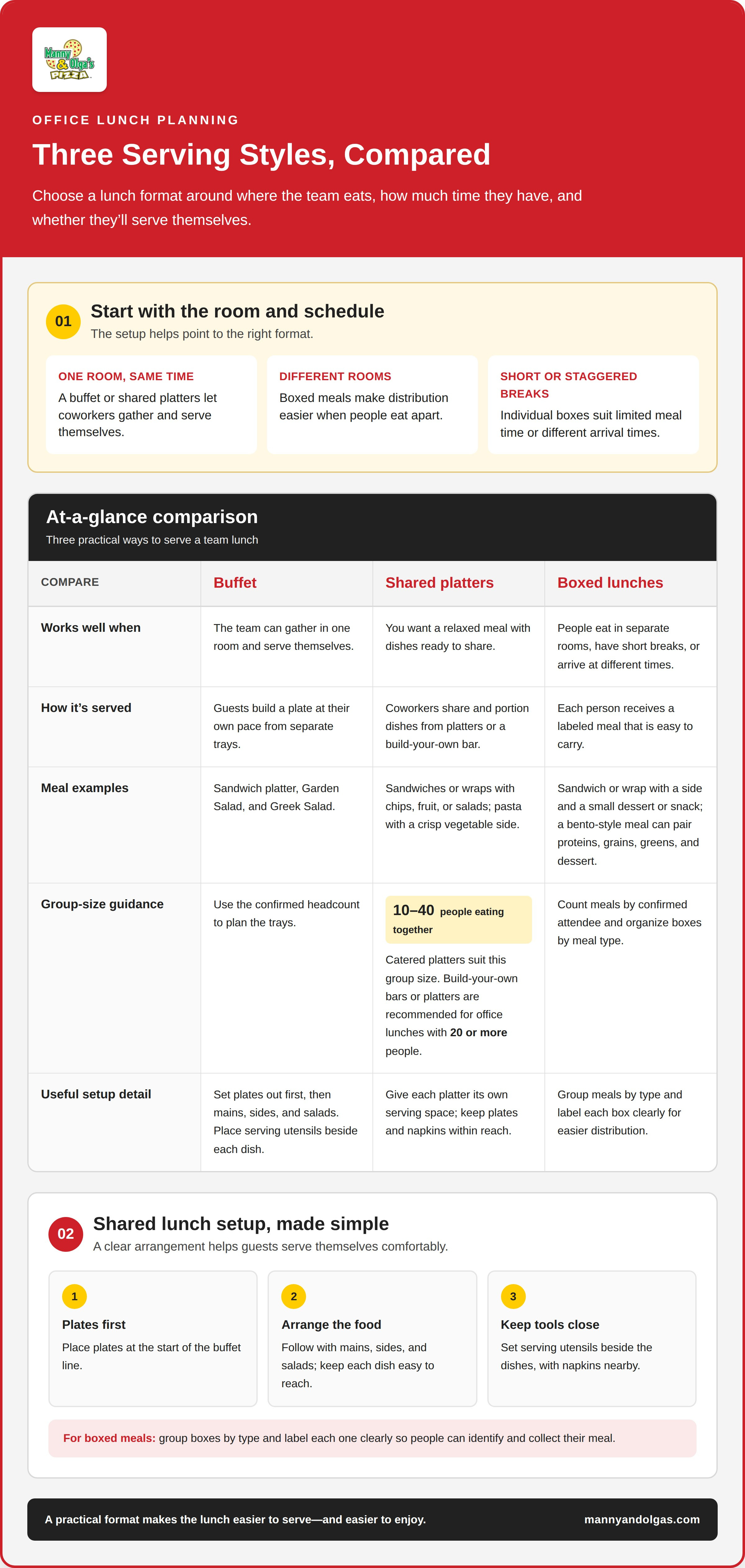
A buffet works well when the team can gather in one room and serve themselves. Set out plates first, then arrange mains, sides, and salads in a clear sequence. For example, place a sandwich platter beside Garden Salad and Greek Salad, with serving utensils next to each dish. Separate trays make it easier to choose a combination that suits individual appetites.
Shared platters add a relaxed feel to a Friday meal. Catered platters suit groups of 10 to 40 people eating at the same time, while build-your-own bars or platters are recommended for office lunches with 20 people or more. A taco bar, for example, can offer tortillas, rice, beans, cheese, salsa, and other toppings for guests to assemble.
Choose shared dishes that are easy to reach and portion. Sandwiches and wraps pair neatly with chips, fruit, or salads, while pasta dishes can sit beside a crisp vegetable side. Give each platter its own serving space, and keep plates and napkins within reach. A clear layout helps prevent a crowd gathering around one dish.
Individual boxed meals solve a different problem. They’re useful when employees have limited time, need to eat in separate rooms, or have short breaks during training. A box might include a sandwich or wrap, a side, and a small dessert or snack. A bento-style meal can combine proteins, grains, greens, and a small dessert.
For boxed lunches, group meals by type and label each box clearly. This makes distribution easier when people work in different rooms or arrive at different times. A sandwich, side salad, and fruit make a simple combination; a separate box can offer a plant-based alternative. Keep meals compact enough to carry from a meeting room to a desk.
Match the serving format to the room and the schedule. A shared buffet encourages coworkers to eat together, while individual boxes help people move between sessions without carrying serving dishes. For a casual spread centered on ready-to-share trays, explore party platter options as one way to keep the meal simple and communal.
For short team meetings, sandwich platters, wraps, boxed lunches, and simple barbecue trays are easy to serve. A barbecue spread might include smoked brisket, pulled pork, ribs, smoked chicken, and side dishes.
Guest counts, budgets, delivery, and setup
Start with a clear headcount, not a guess. Ask employees to RSVP, then separate confirmed attendees from tentative responses. A reliable count helps reduce food waste and the chance of running short. If people work different shifts, note how many will eat at each time and when each group needs food.
How much food should you order per person? Plan a main meal for each confirmed attendee, then adjust shared sides to fit the menu, appetites, and meal length. A sandwich lunch with salads, hummus, and dessert, for instance, needs a different balance from a cheese-heavy platter with sauces and several substantial sides.
Budget decisions start with the meal format and the group’s needs. A main with shared sides may simplify ordering; individual meals can make distribution easier across rooms. Decide whether to include dessert, extra sides, or dietary alternatives, then make those priorities clear when requesting a quote.
For a local office, practical restaurant catering choices include pizza, sandwiches, salads, and party platters. The best fit depends on your location, meal schedule, headcount, and what the team enjoys. Compare the menu format with your setup needs rather than choosing by cuisine alone.
A useful catering request includes the event date, location, estimated guest count, preferred meal time, desired food, budget, and special dietary needs. Include shift times if employees eat in separate groups. These details give the caterer a clear picture of the order and help match the menu to the office schedule.
Delivery planning needs a named receiver and a clear drop-off point. Confirm the delivery time, and make sure someone can receive the food and direct the setup. For a working lunch, arrange the food 10 minutes early so plates, serving tools, and dishes are ready before the session begins.
Before ordering, decide what the budget needs to cover. Account for mains, sides, special dietary meals, and any supplies needed for the chosen format. Avoid adding dishes without considering the headcount. A clear employee list and meal plan make it easier to match quantities to attendance.
Close team lunch RSVPs two days before placing the order. Then send the final count, serving times, and any updates to dietary needs together. This gives the caterer one concise set of details to plan around, whether the menu features sandwiches, salads, cheese, or individual portions.
4. Lunch presentation
A lunch table feels more inviting when each dish is easy to spot and reach. Group mains, sides, and desserts in a clear flow. For example, place grain bowls together, with sauces and toppings nearby. This gives guests a natural path and helps prevent crowding around one corner.
Use color to add variety to the spread. Roasted vegetables beside greens and warm grains look livelier than several beige dishes grouped together. For a baked potato lunch, serve toppings such as cheese, vegetables, and sauces in separate bowls. Guests can see the options and build a plate that suits them.
Give each dish room to stand out. A large platter squeezed between serving containers is harder to approach, especially when several colleagues arrive together. The caterer can space trays across the table, keep serving tools beside their dishes, and leave a clear area for plates. A tidy layout also makes refills easier to manage.
Labels make a varied menu easier to navigate. Place a name card beside each dish, such as “grain bowl” or “roasted vegetables,” rather than relying on guests to guess. Include dietary details where relevant. Put each card directly in front of its matching tray so no one has to search a separate menu.
Make special meals visible without isolating guests. If someone needs a plant-based dish, place it with the other mains and label it clearly. Keep its serving utensil with the dish. This makes the option feel like part of the meal and helps prevent confusion between similar-looking dishes.
For contrasting textures, pair crisp vegetables with creamy hummus and soft bread. Serve dressing separately to keep greens from becoming soggy before lunch. Put small sides in accessible containers and place dessert at the end of the serving line. These details help keep the table organized as people serve themselves.
Match presentation to the room, not just the menu. A narrow meeting-room table calls for compact trays and a simple line of dishes; a larger break area can handle separate stations for mains, sides, and dessert. The caterer can plan the setup around the available surface, serving direction, and number of guests arriving at once.
Before service, align labels, utensils, and dishes with the final menu. A quick walkthrough can catch a misplaced card or missing serving spoon before guests arrive. Clear spacing, visible variety, and a few thoughtful details help make the Friday lunch table welcoming.
5. Pizza and flatbreads for casual lunches
Pizza works well for a workplace lunch because slices are easy to share and familiar to many teams. Casual Friday team lunch platter ideas can start with a classic cheese pie, then add meat and vegetable choices. That gives coworkers variety without making Friday lunch complicated.
Build the spread around different flavors. Cheese Pizza is a familiar option, Pepperoni Pizza brings a savory choice, and Veggie Lovers Pizza adds a vegetable-focused selection. Greek Pizza offers another flavor direction. These casual Friday team lunch platter ideas give the group choices without asking one style to suit everyone.
Vegetarian options should feel like a main choice, not an afterthought. Pair Veggie Lovers Pizza with a salad for a satisfying combination. Keep pizza names visible on their trays, especially when toppings look similar. That small detail helps colleagues choose quickly during a busy break.
Chicken can add a hearty flavor to a shared spread. BBQ Chicken Pizza offers a different taste from classic cheese or pepperoni. For a fuller range, set it beside a vegetable pizza and a plain cheese option. The mix gives the team distinct choices without relying on one ingredient or style.
Flatbreads can also suit informal gatherings, especially meetings where guests want manageable portions. Pair them with salad or another simple side, and arrange dishes so people can reach them without crossing the serving line. Keep toppings easy to identify and group similar options together for a clean, inviting table.
Let the workplace schedule guide the setup. For a relaxed team lunch, place pizzas on separate trays with plates nearby. For a shorter break, keep the spread focused and easy to serve. A few carefully chosen options are often simpler to organize than a crowded table of unrelated dishes.
Consider ingredients as well as flavor when planning the menu. Share dietary requests and label different pizza styles clearly. Gluten Free Pizza may suit guests seeking that option, while ingredient details help employees decide what fits their needs. Use separate serving utensils for each tray.
Choose the menu to match the gathering, whether colleagues are celebrating a milestone or simply sharing lunch between tasks. A balanced pizza spread can bring familiar flavors, vegetable choices, and easy serving together. Plan a casual pizza lunch with options suited to your workplace gathering.
Manny & Olga’s Pizza: Party Platters
Manny & Olga’s Pizza offers Party Platters for teams planning a casual shared lunch. They’re a practical fit when you want ready-to-serve food without arranging full-service dining. For a familiar pizza spread, pair Cheese Pizza with Pepperoni Pizza or Manny’s Special Pizza to bring different flavors to the table.
Choose this option when your Friday gathering calls for easy-to-share food and a relaxed meal. A mix of party platters and pizza can suit coworkers who want to grab a slice, sit together, and enjoy the break.
Contact Manny & Olga’s Pizza to discuss your team lunch.
Make Friday Lunch a Team Ritual
A shared lunch can be a welcome pause in the workweek, not another meeting to manage. Start with a simple goal: give colleagues time to connect over food that fits the group. The best casual Friday team lunch platter ideas make that easier, whether you’re celebrating a team milestone or enjoying an ordinary Friday together.
Keep the next decision practical. Choose a familiar menu direction, decide how the group will share the food, and provide the headcount and dietary details when arranging the meal. For a pizza-centered lunch, build around Cheese Pizza, Pepperoni Pizza, and Manny’s Special Pizza.
Ready to plan a relaxed team meal? Contact Manny & Olga’s Pizza to plan lunch. Make room for good food, easy conversation, and a Friday your team can look forward to.
Manny & Olga’s Pizza for Casual Friday Team Lunch
Manny & Olga’s Pizza offers an easy next step when your casual Friday team lunch calls for a platter-style spread. Choose from Party Platters, pizza, Buffalo Wings, salads, and calzones to create a mix for the table.
For a fuller lunch, add options such as Chicken Parmesan with Spaghetti, Baked Ziti with Beef, or Stuffed Shells. Finish with baklava or cheesecake, and order from Manny & Olga’s Pizza when you’re ready to plan a team lunch.
Frequently Asked Questions
What Makes a Good Office Lunch Catering Menu?
A good menu balances dependable favorites with flavor variety and suits the way employees will eat. For a working meeting, choose food that’s easy to serve without interrupting discussion. For a celebratory Friday, a relaxed spread can invite people to linger. In Washington, D.C., the room layout and lunch schedule can help determine whether shared dishes or individual portions make more sense.
What are budget-friendly lunch platter options for an office team?
Shared platters can simplify a group meal because colleagues serve themselves from common dishes. A simple combination might center on Cheese Pizza, with Garden Salad alongside it. Keep the menu focused instead of adding extras that don’t suit the group or occasion. Individual meals may work better when coworkers are split across rooms, while shared food suits groups eating together.
What vegetarian and vegan platter options work well for a team lunch?
Vegetarian platters can feature vegetable-forward dishes, while vegan choices need ingredients free of animal products. Build the spread around vegetables, grains, fruit, and hummus, and serve sauces separately so guests can choose what fits. Don’t assume a dish meets a dietary need based on its name alone. Clear ingredient details help employees decide whether an option works for them.
How can a caterer build a balanced lunch spread with sandwiches, salads, snacks, and desserts?
Start with one filling main, then add a fresh side, a snack, and a modest sweet finish. For example, a spread could combine sandwiches, Greek Salad, Buffalo Wings, and baklava. This gives colleagues different textures and flavors without letting extras take over. Keep dessert separate from savory dishes and choose portions that fit the meeting or gathering.
How far in advance should I order team lunch platters, and how will Manny & Olga’s Pizza keep them fresh?
Order timing depends on the menu, headcount, and delivery arrangements, so set the date and meal time early. Share one final order summary with the guest count and dietary requests. Coordinate delivery close to the planned meal, and keep dishes covered until setup. Timing and handling both affect freshness, so include them in the plan.


