
A moving crew can work through a meal break faster than you can plan one. For feeding a hungry moving crew in DC, an affordable approach is to choose filling, easy-to-share food and match the order to the crew’s size and schedule.
It’s understandable to want to keep everyone fueled without adding another moving-day headache. This guide covers practical ways to plan a crew meal, the details that shape a catering order, and food assistance available across the Washington, DC region for households with separate food needs. You’ll find options for organizing a satisfying meal and locating local community resources.
Key Takeaways
- Choose filling, easy-to-share foods that suit a moving crew’s break and keep serving simple.
- Food quantities depend on the crew size, the work schedule, and how substantial the meal needs to be.
- Compare practical lunch formats to find an option that fits the crew’s needs and your budget.
- For large group orders in DC, consider delivery logistics alongside the menu and meal timing.
- Learn how catering costs are shaped and where Washington, DC-area residents can find food assistance.
What easy, filling foods can a caterer provide for a moving crew?
A moving crew needs food that feels substantial, travels well, and takes little time to serve. A meal can center on hot entrees, hearty sandwiches, or shareable portions. A boxed lunch, for example, pairs a sandwich with a simple side, while a hot meal makes a more substantial midday break. Choose a format that suits the worksite, break schedule, and serving space.
Sandwiches and wraps suit crews who need a quick, portable meal. Options such as chicken, roasted vegetables, or deli-style fillings offer variety without requiring plates and utensils for every dish. A caterer can package each portion separately, making distribution straightforward when movers reach the break area in stages. Keep napkins and condiments together so workers can eat without searching through separate bags.
For a warmer, more filling spread, consider a main dish with familiar sides. A caterer might serve pasta with vegetables, a rice-based entree, or a baked dish that portions cleanly. These meals work well when the crew can pause together and use a designated serving area. The caterer can organize each dish with its serving utensil, helping the line move smoothly instead of bunching around one container.
Shareable foods can suit a crew with different appetites and preferences. A selection of savory slices, salad, and simple sides offers variety without making the spread complicated. Each worker can take a filling main portion and add a side. Individual packaging can also help when some movers eat separately or take food back to the truck.
Plan the meal around practical details, not just taste. Provide the delivery address, preferred arrival window, crew’s break timing, and dietary requests. Food arriving too early may lose its appeal, while a late delivery may reach workers after they return to work. Say whether the meal will be served indoors, outdoors, or near a loading area, since that affects packaging and setup.
Practical food ideas for feeding a hungry moving crew in DC start with filling mains, tidy portions, and straightforward service. Choose a format that fits the crew’s schedule and available space. If breaks are staggered, individually packed meals may be easier to distribute than shared trays. If everyone stops together, a shared spread can make lunch feel generous while keeping setup simple.
Good food ideas for feeding a hungry moving crew in DC match the meal to the worksite, too. A sandwich may suit a short break near the truck, while a hot entree fits a planned pause with room to sit. Choose a format around the crew’s actual schedule to make the meal both practical and satisfying.
How does a caterer determine how much food to provide per mover?
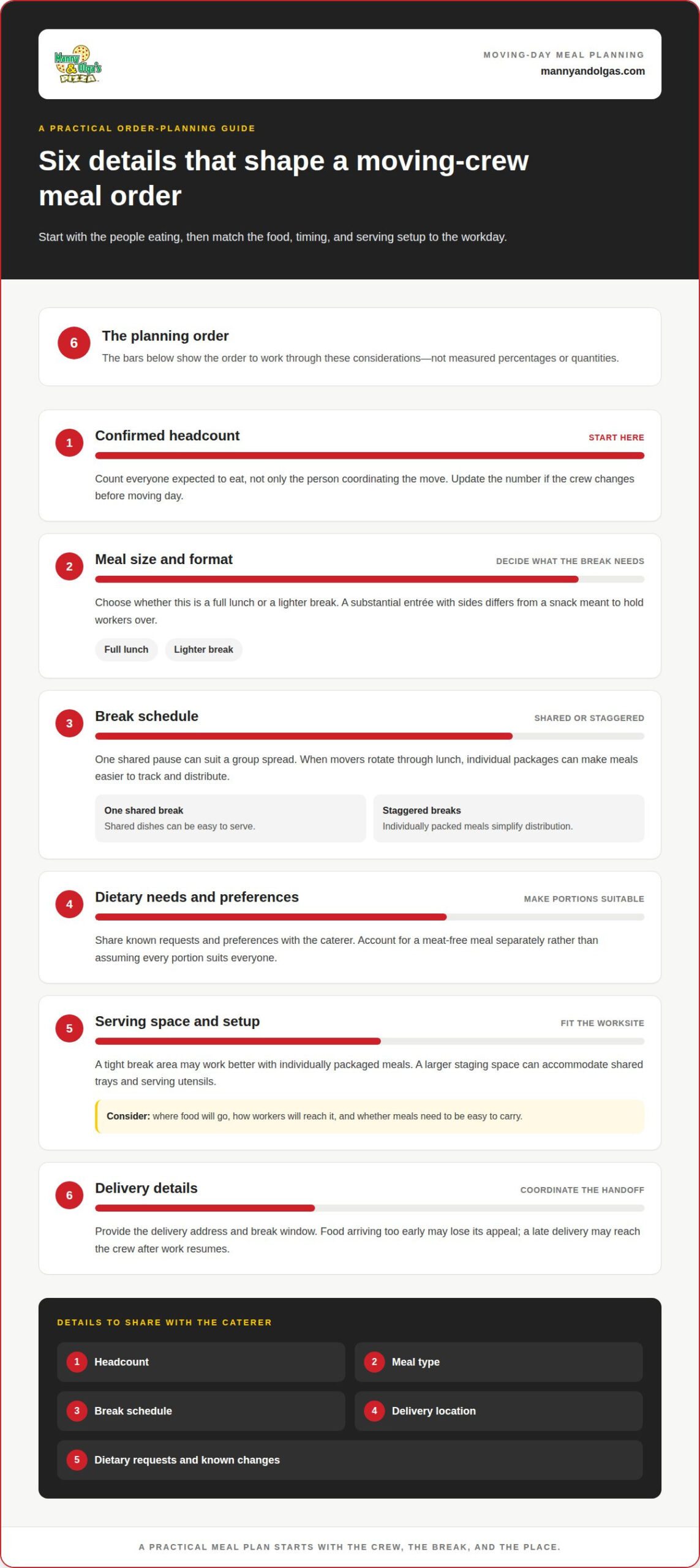
Start with the confirmed headcount, then adjust the order to fit the meal and work schedule. Include everyone expected to eat, not just the person coordinating the move. If the crew changes before moving day, an updated count gives a better basis for planning portions. The delivery address and break window matter as well: food arriving at the wrong time can disrupt the crew’s work.
Next, decide whether the meal is a full lunch or a lighter break. A substantial entree with sides calls for a different mix than a snack meant to hold workers over until the next meal. The menu matters, too: a filling main dish may carry the meal, while a lighter option may need a more generous side. Share these details to shape an order around the actual meal rather than a generic per-person estimate.
Work timing can change how food should be portioned. If the crew takes one shared break, a group spread may be easy to serve. If movers rotate through lunch while working in separate rooms, individually packed meals can make portions easier to track and distribute. Plan whether food should be packed by person or arranged for shared serving based on the break schedule.
Dietary requests and menu preferences affect how much of the order is suitable, not just the overall count. If a mover needs a meat-free meal, for example, account for that separately instead of treating every portion as interchangeable. Communicate known dietary needs, preferences, and changes to the crew list. Clear details help ensure everyone has a suitable meal.
Serving conditions also shape the plan. A tight break area may suit individually packaged meals, while a larger staging space can accommodate shared trays and serving utensils. Consider where the food will go, how workers will reach it, and whether meals need to be easy to carry. For staggered breaks, separate packaging can help food reach the right person without slowing the lunch line.
To request a useful estimate, provide the caterer with the headcount, meal type, break schedule, delivery location, and dietary requests. Update the count if the crew or schedule changes. These details help turn a moving-day plan into an order that fits the people eating and the time available. For an easy starting point, explore group meal options and consider which format suits the crew’s break.
What affordable lunch options can caterers provide for moving crews in Washington, DC?
An affordable crew lunch balances filling portions with a simple menu. A caterer can offer boxed sandwiches, wraps, or a shared hot entree with sides. Each format solves a different serving problem: individual meals are easy to hand out, while shared dishes suit a planned group break. For example, a sandwich with one side can be more straightforward to portion than a spread with several separate entrees.
Boxed lunches make sense when movers are working across different rooms or taking breaks in shifts. A caterer can pack one main item and a side together, which reduces serving setup and helps each person get a complete meal. A wrap or sandwich travels easily between a staging area and a parked truck. If the crew eats together, the same menu can be delivered in larger shared trays instead.
Shared entrees can stretch a menu while still giving workers a warm, substantial lunch. Options such as pasta, rice dishes, or baked entrees pair naturally with a salad or vegetable side. Keep the combinations focused: one main dish and a complementary side are easier to portion than several competing mains. A caterer can suggest a menu based on the crew’s preferences and the available break space.
For a mixed group, variety doesn’t have to mean ordering a different full meal for everyone. A caterer can combine a familiar main option with a vegetarian choice, then package those portions separately. Share any known dietary needs before finalizing the order. Clear labels can help the crew identify meals quickly, especially when lunch arrives during a busy move and workers are collecting food at different times.
Washington, DC, delivery logistics can shape which format makes sense. A narrow entryway, limited parking, or busy loading area may make individually packed meals easier to distribute than large serving trays. A scheduled group break may favor shared dishes, since the crew can serve itself at one central table. Specify where the food should arrive and how the crew will take its break.
To keep the order focused, choose the meal format before adding extras. Decide whether movers need individual boxes or a shared spread, then select a main dish and sides that fit. Avoid ordering several similar items that compete for the same appetite. Use the headcount, menu choices, and serving setup to plan a complete meal without unnecessary variety. These practical choices make lunch easier to serve and manage on moving day.
4. Which DC restaurants deliver large group meals near me
For a moving crew in Washington, DC, start with the exact delivery address, then focus on restaurants that serve that location. A crew working near Capitol Hill may need a different delivery route than one taking a break in Georgetown. The address helps narrow the search before you compare menus or order formats.
Next, look for a menu format suited to a group rather than separate individual orders. A family-style meal, party platter, or boxed lunch can make handoff easier at a loading site. For example, individually packed meals may work better when movers take staggered breaks. Shared trays may suit a crew stopping together in one room. The format should match how the team will collect and eat lunch.
Restaurant menus often distinguish regular orders from catering or group options. Check the menu details, such as whether portions are packaged separately or served in shared containers. A large order assembled from unrelated single meals may arrive in more bags and require extra sorting. A menu designed for group service can simplify setup, especially when the break area has limited table space.
Delivery logistics deserve equal attention. Give the restaurant the building entrance, loading area, or another clear handoff point rather than relying on a broad neighborhood description. Near the National Mall, for example, the street address and access point matter more than saying “downtown.” Share when the crew’s break begins so the delivery can be planned around the work schedule.
Before placing a group order, identify the headcount, meal format, dietary requests, and preferred arrival window. These details help organize portions and clarify the order. If crew members need different meals, separate labels or packaging can prevent mix-ups. A concise order plan also helps keep the handoff clear when movers are working across several floors or entrances.
“Near me” depends on where the moving crew will actually eat, not just the home address. A restaurant that serves a Washington, DC residence may not use the same route or have the same access to a second worksite. Match the delivery location to the planned break point, then choose a menu that suits the crew’s schedule and serving setup. This makes the search more practical than relying on distance alone.
Look for restaurants that deliver to the crew’s exact break location and offer group formats such as family-style meals, party platters, or boxed lunches. Check their group-menu details and coordinate the handoff point and arrival time.
For crews interested in local food efforts alongside a group order, the Capital Area Food Bank sources and distributes food for more than 60 million meals each year in the Washington, DC region. The organization states that a $1 donation provides 2 meals and distributed 522,000 meals in wards 7 and 8 from March through May. D.C. Central Kitchen uses 3,000 pounds of donated and recovered food each day to prepare meals and prepared a million meals and snacks for its school food program last year.
5. What is the average cost of catering lunch for movers in DC
For a moving crew in Washington, DC, lunch catering costs depend on the order, not a single standard menu. The headcount, selected food, serving format, and delivery details all shape the total. Individually packed meals and shared platters, for example, require different preparation and packaging. The amount reflects the specific meal plan and order requirements.
Headcount is a key factor because the order must account for everyone eating. A confirmed crew list gives a basis for planning portions, while a changing count can alter the order. A meal for movers plus onsite coordinators includes more people than a crew-only order. Sharing the expected count early helps shape the order around the group’s actual needs.
Menu choices also affect the total. A simple lunch built around one main item differs from a spread with several mains and sides. A caterer can help focus the selection so it feels filling without adding dishes the crew may not need. For instance, choosing one main and a complementary side keeps the order more straightforward than mixing several meal formats.
Packaging and service style matter, too. Individually packed meals can simplify distribution when movers take breaks at different times. Shared trays may suit a crew eating together, but serving utensils and a suitable setup become part of the plan. Say whether food will be handed out near a loading area or set on a table, since that can influence packaging needs.
Delivery information helps clarify the order. A precise Washington, DC address, access instructions, and preferred arrival window provide practical details for planning. A building entrance near the moving truck is more useful than a general neighborhood description. Match the meal’s timing and handoff point to the crew’s break plan.
Catering prices depend on the order. Key factors include the number of meals, menu selections, portion plan, packaging, and delivery requirements. A clear request can include the headcount, preferred meal format, dietary needs, delivery address, and target arrival time. These details help shape an order for the moving crew rather than an unrelated group.
To move from budgeting to a specific order, gather the crew count and lunch preferences, then request a catering quote. That gives the caterer useful information for matching the menu and service format to the move. For example, a crew with staggered breaks may need a different packaging plan than one taking lunch together. Clear details make the next planning step more direct.
There is no single average cost; the total depends on the meal plan, number of meals, packaging, and delivery requirements. Choose a plan that fits the crew’s needs.
These figures offer general food-access context, not a catering quote: the USDA’s permanent increase to SNAP benefits averaged $36.24 per person each month and $1.19 per person per day. The national average was 8,800 residents per grocery store.
Manny & Olga’s Pizza
Manny & Olga’s Pizza can make moving-day lunch easier to organize with catering for a hungry crew. Choose from Cheese Pizza, Pepperoni Pizza, Manny’s Special Pizza, and Meat Lovers Pizza for a familiar, filling centerpiece. A mix of pizza choices can also suit a group with different tastes.
When planning lunch, share the crew’s headcount, delivery details, and preferred meal timing. These details help shape an order around the move and break plan, whether everyone eats together or takes lunch in shifts. For a straightforward group meal, choose pizza options that suit your crew.
Contact Manny & Olga’s Pizza to discuss catering for your moving crew.
Make the Moving-Day Meal Part of the Plan
Before moving day, choose a clear meal break and decide who will coordinate it. This connects the crew’s schedule with the food handoff, so lunch has a place in the day instead of becoming another last-minute task. Use these food ideas for feeding a hungry moving crew in DC to plan a meal that fits.
Manny & Olga’s Pizza offers Cheese Pizza, Pepperoni Pizza, and Manny’s Special Pizza for a group meal. Share your catering needs and preferred meal format to plan an order. For more food ideas for feeding a hungry moving crew in DC, consider which choices suit your crew and break plan.
Ready to plan a meal for your crew? Contact Manny & Olga’s Pizza, and give moving day a more satisfying break.


